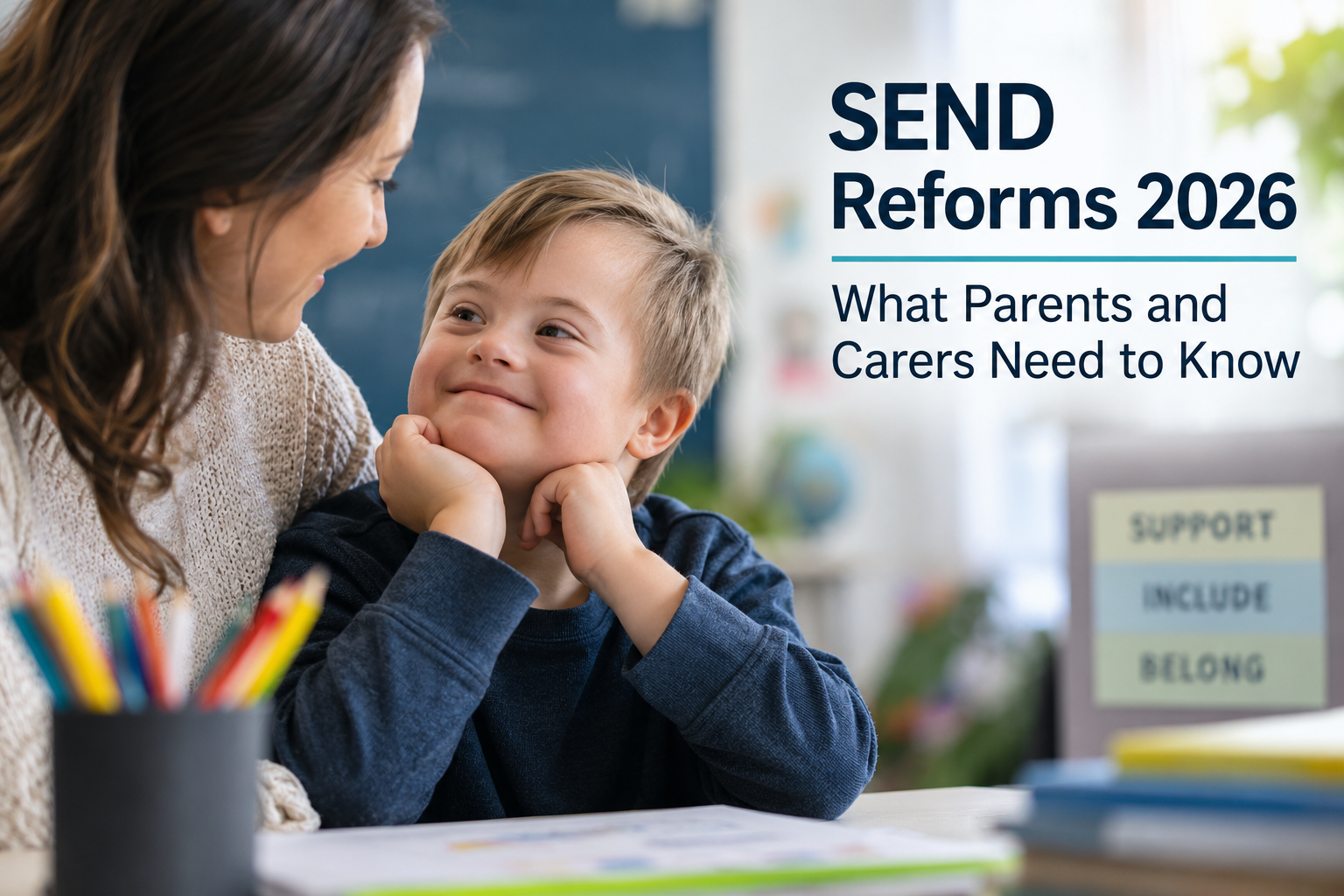
THE FUTURE OF SEND SUPPORT

Published · 4 min read

ARE WE REALLY READY FOR THE BIGGEST CHANGES IN A GENERATION?
Few subjects are generating as much discussion, concern and debate across the SEND community as the Government's proposed reforms to special educational needs and disabilities provision in England. For parents, carers, educators and professionals, the future of the system is not an abstract political conversation. It is about whether children will receive the support they need, whether families will retain meaningful rights and whether schools will have the resources to provide genuinely inclusive education.
The Government's Schools White Paper, Every Child Achieving and Thriving, published in February 2026, set out significant proposals to reshape the way children and young people with SEND are supported. At the heart of the proposals is an ambition to move towards a more inclusive system in which children receive support earlier, particularly within mainstream education, rather than relying so heavily on Education, Health and Care Plans.
The proposals introduce a tiered approach to support, moving through universal, targeted, targeted plus and specialist provision. Schools would also be expected to develop Individual Support Plans for children and young people with identified special educational needs. The intention is that support should become more consistent, accessible and responsive, regardless of where a child lives or which educational setting they attend.
On paper, there is much to welcome in the ambition behind earlier intervention. Nobody wants children to spend years struggling before their needs are recognised. Nobody wants parents to feel that the only way to secure meaningful support is to enter a lengthy assessment process or fight for an EHCP. A system that identifies needs early and provides appropriate support without unnecessary delays is something the SEND community has been asking for over many years.
However, the conversation becomes considerably more complicated when we look at what happens to existing legal protections and how the proposed changes will work in practice.
For many families, an EHCP represents far more than a document. It provides a legally enforceable framework setting out a child's needs, the provision required and the responsibilities of the local authority. Families who have spent years securing a plan may understandably feel anxious about any proposal that could change the way these protections operate.
There are also questions about whether mainstream schools will have sufficient funding, staff, training and specialist expertise to deliver the additional support being proposed. Inclusion cannot simply mean placing more children into mainstream classrooms and expecting teachers to manage without additional resources.
The concerns are not limited to parents. The Institute for Government's October 2026 analysis highlighted the considerable pressures facing the existing system, finding that fewer than half of pupils with SEND say they enjoy coming to school and that the average secondary pupil with an EHCP misses nearly a day of school each week. Its analysis also warned that current growth could result in almost one in ten pupils having an EHCP by 2030.
Another important development is the consultation process itself. The Department for Education confirmed in October that almost 10,000 people responded to the original SEND reform consultation and more than 3,000 attended engagement events. The Government says it is continuing to analyse those responses and develop its proposals with families and professionals.
This matters because meaningful reform cannot be designed without the people who understand the system from the inside. Parents know what happens when provision is not delivered. Teachers understand the pressures of supporting children with increasingly complex needs. Young people understand what it feels like to attend a school where their needs are not properly recognised.
Their experiences must be central to the decisions being made.
The Government has stated that the proposed new legislation is not expected to take effect until September 2029 and that no changes to EHCP support are expected before at least September 2030. This means the existing legal framework remains important during the transition period. Families should not assume that current statutory rights have already changed.
Ultimately, the success of SEND reform will not be measured by the number of new policies announced or the language used in a White Paper. It will be measured by whether children receive the right support at the right time, whether families feel listened to and whether schools are genuinely equipped to meet the needs of every learner.
There is an opportunity here to create something much better than the system we currently have. But that opportunity must not come at the expense of the rights and protections families have fought so hard to secure.
Reform is necessary. But reform must be built around children, not simply around budgets, administrative processes or the desire to reduce the number of EHCPs.
Every child deserves to be supported, understood and given the opportunity to thrive. That should remain the starting point for every decision.