DLA for Children with Additional Needs

Published · 5 min read
What Parents Need to Know About Applying and Getting Support
Raising a child with additional needs can bring extra costs that other families might not have to think about. From specialist equipment and additional clothing to travel expenses, appointments and the everyday practicalities of providing extra care, the financial impact can be significant.
One benefit that many parents and carers may be entitled to, but aren't always aware of, is Disability Living Allowance (DLA) for children.
If you've heard other parents talking about DLA, or you've wondered whether your child might qualify, you probably have lots of questions. What is it? Who can claim? Does your child need a formal diagnosis? And how do you actually complete an application?
Let's look at what you need to know.
What is Disability Living Allowance for children?
Disability Living Allowance is a benefit designed to help with the additional costs of caring for a child who has a disability or health condition.
It is not means-tested, which means your income and savings do not determine whether your child qualifies.
DLA for children is available to eligible children under the age of 16 in England and Wales. It has two components: a care component and a mobility component.
The care component relates to the extra help or supervision a child needs during the day or night. The mobility component relates to difficulties with getting around.
A child may qualify for one component or both, depending on their individual needs.
Does my child need an official diagnosis?
This is one of the most common questions parents ask, particularly when they're waiting for an autism or ADHD assessment.
The important thing to understand is that DLA is based on the additional care, attention, supervision or mobility support your child needs, rather than simply the name of their diagnosis.
A child does not automatically qualify because they have autism, ADHD, a learning disability or another condition. Equally, not having a formal diagnosis does not automatically prevent a successful application.
The question is how your child's needs compare with those of another child of the same age who does not have a disability.
For example, a child who needs frequent supervision because they have little awareness of danger may require significantly more support than another child of the same age.
A child who experiences substantial difficulties with everyday personal care, communication or managing daily routines may also need additional attention.
Every application is considered on its individual circumstances.
What does the care component cover?
The care component considers the additional help a child needs with things such as personal care, communication, supervision and other everyday activities.
This might include needing help to get dressed, wash, eat or use the toilet. It can also include the supervision needed to keep a child safe or support them through situations they find difficult.
For example, an autistic child might need considerably more support with everyday activities because of communication differences, anxiety or sensory difficulties.
Another child might require frequent supervision because they struggle to recognise danger or need help managing their behaviour and emotional responses.
The important point is to explain the additional help your child needs and how often they need it.
What about the mobility component?
The mobility component relates to a child's ability to get around.
It can apply to children with physical mobility difficulties, but eligibility is not limited to physical disabilities. Some children may have significant difficulties with outdoor mobility because of other conditions or needs.
There are different eligibility rules for the lower and higher mobility rates, including minimum age requirements.
If your child struggles to walk outdoors, needs substantial guidance or supervision when getting around, or has other significant mobility difficulties, it's worth reading the official guidance carefully.
How do you apply?
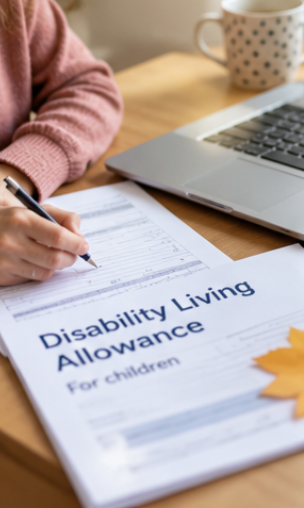
If your child lives in England or Wales, you can request a DLA claim form from the Department for Work and Pensions or download and print the relevant form.
The application asks detailed questions about your child's needs and the support they require.
It can be tempting to rush through the paperwork, particularly when you're already juggling a busy family life. However, taking time to explain your child's circumstances can make the application much clearer.
Think about an ordinary day. What help do they need getting ready in the morning? Do they need supervision when eating, washing or getting dressed? What happens when they become overwhelmed? Do they need support during the night?
It can be helpful to keep a diary for a week or two, noting the additional care your child receives and any difficulties they experience.
Where appropriate, include supporting information from professionals who understand your child's needs, such as health professionals, therapists or education staff.
Be honest about the difficult days
Many parents naturally focus on what their child can do rather than what they find difficult.
You might be used to stepping in before a problem occurs, providing constant reminders or quietly adapting everyday activities so that your child can manage.
Because these things have become part of your normal routine, you may not even recognise how much additional support you're providing.
When completing a DLA application, explain the reality of your child's needs. Don't exaggerate, but don't minimise the difficulties either.
If your child can complete an activity independently sometimes but needs considerable help on other occasions, explain that.
What happens if your child lives outside England or Wales?
The benefit system differs across the UK.
In Scotland, eligible children generally apply for Child Disability Payment through Social Security Scotland rather than DLA.
In Northern Ireland, DLA for children is administered separately through the relevant Northern Ireland service.
Always check the guidance for the country where your child lives.
Where can you get help?
If you're struggling with the application, organisations such as Citizens Advice and specialist disability charities can provide information and guidance.
You can also read the official government guidance before starting your application.
Remember that receiving DLA does not depend on having a particular diagnosis or being unable to work. The focus is on your child's additional needs and the support they require.
Don't miss out on support you may be entitled to
Applying for benefits can feel daunting, particularly when you're already managing appointments, education and everyday family life.
But if your child needs substantially more care or supervision than another child of the same age, it's worth finding out whether you could be entitled to support.
You know your child better than anyone. Taking the time to explain their everyday needs could make a real difference to your family's finances.
Useful resources:
- GOV.UK – Disability Living Allowance for children
- Citizens Advice – Checking whether your child can get DLA
This article provides general information, not individual benefits advice. Eligibility and payment rates can change, so always check the latest official guidance before applying.