Never Underestimate What Someone Is Capable Of!
Published · 7 min read
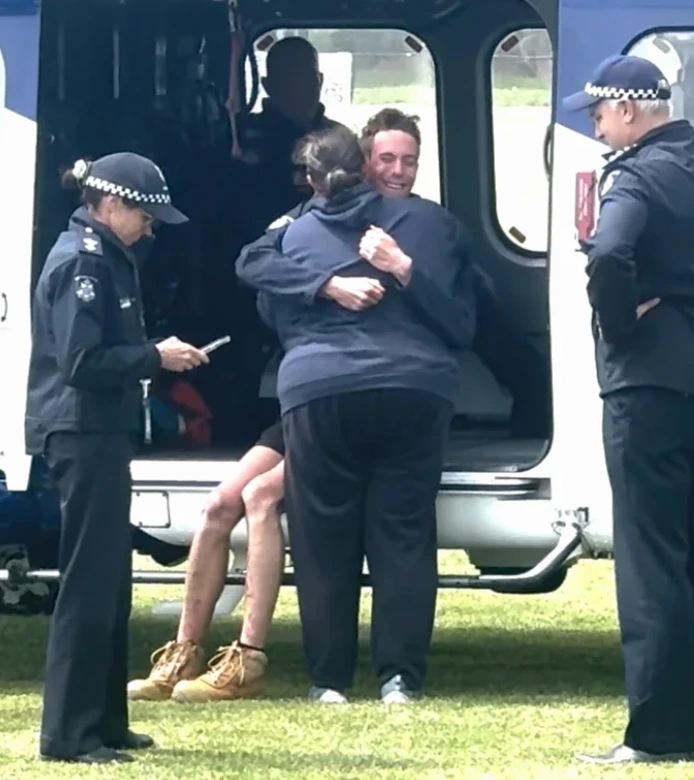
One Young Man's Story Is A Reminder We All Need
Sometimes a story comes along that makes you stop, think, and question some of the assumptions we make about other people.
The story of 17-year-old William, who has just been found alive after spending six days lost in the Australian wilderness, is one of those stories.
William, who has Level 2 autism, disappeared after becoming separated from his camping companion near Walhalla in Victoria. What followed was an extensive search involving more than 100 emergency personnel and volunteers.
For six days, William was alone in challenging wilderness conditions. He had very limited supplies, endured difficult terrain and changing weather, and somehow managed to survive until a police helicopter spotted him beside a creek.
When he heard the helicopter, he woke up and gave the rescue crew a thumbs-up.
Just imagine that moment. The relief for his family, the rescuers and everyone who had been hoping and praying for his safe return must have been immeasurable.
But beyond the remarkable rescue itself, there is something else about this story that I think deserves attention.
William is autistic. And perhaps this is a timely reminder that we should never underestimate what someone is capable of simply because they have a disability.
Challenging the assumptions we make about autism and disability
There are still so many misconceptions surrounding autism.
People sometimes make assumptions about an autistic person's ability to think independently, make decisions, assess situations, solve problems or cope when circumstances become stressful.
Of course, autism is a spectrum, and every autistic person is different. Some people need substantial support with certain aspects of everyday life, while others may need very little. Some may find unexpected changes particularly difficult, while others develop ways of navigating situations that work well for them.
But having autism does not automatically mean someone cannot think logically, make decisions, demonstrate resilience or navigate difficult circumstances.
William's experience is a powerful reminder that a diagnosis does not tell us everything about a person.
We don't know exactly what was going through William's mind during those six days, and we shouldn't pretend that his experience tells us how every autistic person would respond to the same situation.
What we do know is that he survived an incredibly difficult ordeal.
And that alone should make us pause before making assumptions about what someone can or cannot do.
The same principle applies far beyond autism.
People with physical disabilities, learning disabilities, neurological differences, sensory impairments and mental health conditions are frequently judged according to what others think they might struggle with, rather than being given the opportunity to demonstrate what they can actually achieve.
We become so focused on someone's limitations that we sometimes completely overlook their strengths.
And that brings me to a much bigger issue.
The employment gap: How many talented people are we overlooking?
Let's take this conversation into the workplace.
Around the world, people with disabilities continue to experience significant barriers when it comes to finding and maintaining employment.
According to the International Labour Organization (ILO), approximately 1.3 billion people, or nearly one in six of the global population, experience significant disability.
Yet only around three in ten people with disabilities are active in the labour market.
The ILO also reports that people with disabilities are less likely to participate in the workforce, experience higher unemployment rates and, when employed, earn on average 12% less per hour than people without disabilities.
Importantly, the research suggests that much of this pay gap cannot be explained by differences in education, age or the type of work people undertake.
In other words, there are systemic barriers at play.
These figures should make every business owner, employer and recruitment professional stop and think.
How many capable people are being overlooked before they even get through the door?
How many applications are dismissed because an employer sees a disability before seeing the individual?
How many people are never interviewed because someone has decided, without ever meeting them, that they won't be able to do the job?
And how many businesses are missing out on valuable skills, different perspectives, problem-solving abilities and talent because they are making assumptions rather than looking at potential?
Are businesses overlooking the very people who could help them succeed?
One of the biggest problems with traditional recruitment is that we often have a very narrow idea of what the ideal employee looks like.
We create job descriptions, interview processes and workplace expectations based on what has always been done.
We expect people to communicate in a particular way, work in a particular environment, demonstrate their abilities in a particular format and fit into an established way of doing things.
But what if the best candidate doesn't fit that traditional mould?
What if someone who struggles with conventional interviews is exceptionally capable at the actual job?
What if someone who communicates differently has outstanding analytical abilities?
What if someone who needs a little flexibility around working arrangements is incredibly reliable, committed and productive?
What if someone with a physical disability has exactly the technical expertise, experience and creativity your business needs?
A disability does not automatically determine someone's professional capabilities.
And reasonable adjustments should not be viewed as an inconvenience or an unnecessary expense. They are often what enable someone to demonstrate their true potential.
Sometimes an adjustment might be as simple as providing written instructions, offering a quieter working environment, allowing flexible working arrangements or adapting the recruitment process.
The important thing is to understand the individual rather than make assumptions about what they need.
The ILO's research highlights the importance of workplace accommodations, accessible recruitment and employer support in improving employment opportunities for people with disabilities.
This isn't simply about doing something charitable.
It's about creating fairer access to employment and recognising talent that businesses might otherwise miss.
Inclusion isn't about lowering standards. It's about removing unnecessary barriers.
I think there is an important distinction here.
Employing someone with a disability doesn't mean lowering expectations, compromising on quality or giving someone a position they aren't capable of performing.
It means assessing people fairly and recognising that there is more than one way to demonstrate competence.
The best person for a role should be assessed on their ability to perform that role, with appropriate adjustments where necessary.
Businesses talk constantly about talent shortages, recruitment difficulties, productivity and the need for innovation.
Yet many are still overlooking a significant section of the potential workforce.
Perhaps we need to ask ourselves whether the problem is always a lack of suitable candidates, or whether our recruitment practices are failing to recognise the candidates who are already out there.
A genuinely inclusive workplace doesn't just benefit the person being employed. It can benefit the entire organisation through different perspectives, experiences, approaches to problem-solving and ways of thinking.
And perhaps most importantly, it creates a culture where people are valued for what they bring rather than judged for what makes them different.
One story, a much bigger message
I don't want to turn William's frightening experience into a simplistic lesson about autism. He is a young man who has been through an incredibly difficult experience, and above all, I am delighted that he has been found alive and is receiving the care he needs.
But I do think his story gives us an opportunity to reflect.
We don't know what someone is capable of until we give them the opportunity to show us.
We shouldn't assume that someone cannot make decisions because they have autism.
We shouldn't assume that someone cannot be independent because they have a physical disability.
We shouldn't assume that someone cannot be a brilliant employee because they communicate differently, learn differently or need adjustments in the workplace.
And we certainly shouldn't allow a diagnosis, a disability or someone else's perception of what is possible to define a person's potential.
Perhaps the biggest question for employers is this:
How much talent are you missing because you are too busy focusing on what someone might not be able to do, rather than discovering what they can?
William's story is a reminder that people are capable of surprising us.
But we shouldn't have to wait for someone to survive six days in the Australian wilderness to recognise that.
We should be giving people that same opportunity every single day, including in our workplaces.
Because disability does not mean inability.
And the next person your business overlooks could be exactly the person you've been looking for.
- The William rescue story: CBS News / Associated Press – Boy found alive after six days lost in Australian wilderness.
- Global disability employment figures: International Labour Organization – Disability wage gap and employment outcomes. The ILO reports the 12% average hourly pay gap and low labour-market participation.
- Disability and work: ILO – Disability and work. Covers the scale of disability worldwide and barriers to employment.
- European employment gap: Eurostat – Employment gap between people with and without disabilities. In 2025, the EU employment-rate gap was 24.2 percentage points.