Spain's Rewritten Disability and Care Laws
By Amos Miller, founder of Buzzbo · 11 October 2026 · 3 min read
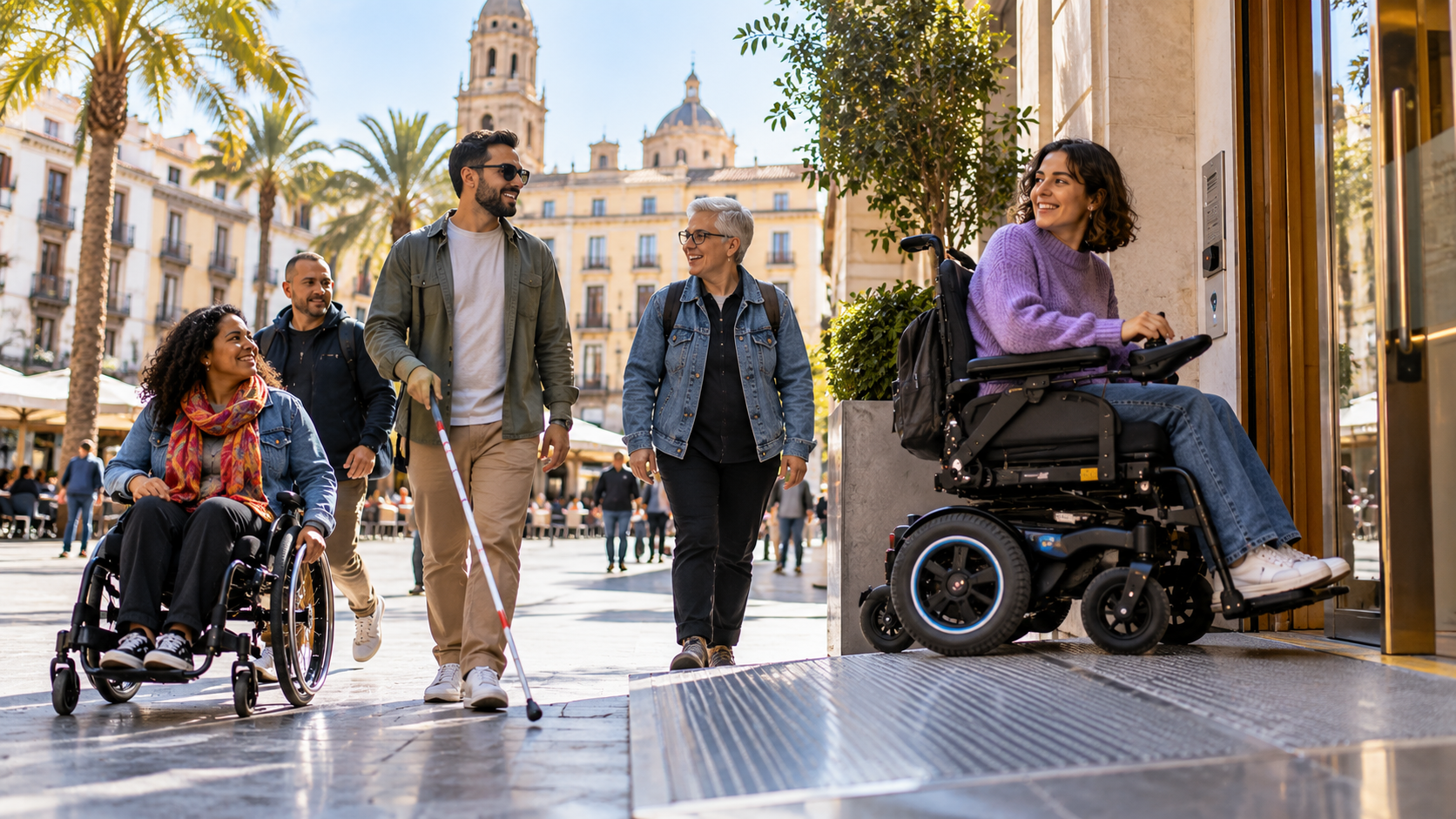
Spain has rewritten key disability and care laws — and the change reaches far beyond accessibility ramps
Spain has just enacted one of the more substantial disability-rights reforms of the year. Published in the official state gazette on 3 October 2026, Law 4/2026 changes both Spain's General Law on the Rights of Persons with Disabilities and its national dependency-care legislation, explicitly recasting accessibility, autonomy and community inclusion around a human-rights model of disability. The law takes effect 20 days after publication.
The reform follows Spain's 2024 amendment of Article 49 of its constitution. That constitutional change replaced outdated language and required public authorities to pursue policies supporting disabled people's autonomy and social inclusion in universally accessible environments. The new legislation begins turning that constitutional principle into more detailed statutory rights.
One of its most consequential changes is deceptively bureaucratic. Spain currently operates separate concepts of discapacidad — disability — and dependencia, referring broadly to a person's need for support with daily living. The new law creates an automatic equivalence for certain legal purposes: someone assessed at dependency Grade I will be treated as having at least a 33% disability, while Grades II and III will correspond to 65%. A person can still seek a separate disability assessment if they believe they qualify for a higher percentage.
That matters because navigating parallel assessment systems can itself become a barrier. Someone whose substantial support needs have already been formally recognised should not necessarily have to start again from zero to establish that they are disabled for another part of the state system. The reform is therefore partly about rights and partly about reducing administrative friction.
The law goes considerably further. It expressly treats universal accessibility as a right, strengthens the focus on independent living and community inclusion, and introduces digital-skills acquisition into the catalogue of dependency services. It also allows home-support services to be organised collectively and collaboratively for small groups in community settings.
Personal assistance is another important element. Disability organisations have long argued that support should not automatically mean institutional care or a family member becoming an unpaid carer. Personal assistance can instead allow someone to decide where they live, how they organise their day, whether they study or work, and how they participate in their community. The new framework strengthens personal assistance within the dependency system, making autonomy rather than simply care a more explicit objective.
There is also a striking provision dealing with humiliation and public ridicule. The reform explicitly strengthens protection against exposing a person publicly because of their disability in order to provoke mockery, including in entertainment and digital environments. The Spanish skeletal-dysplasia organisation ADEE welcomed that provision in particular, while calling for effective implementation for people with achondroplasia and other skeletal dysplasias associated with dwarfism.
That provision has a contemporary significance that extends beyond traditional discrimination law. Disabled people can now be exposed to enormous audiences through social platforms, viral videos and entertainment content. A rights framework designed only around access to buildings and services cannot fully address discrimination occurring in digital public life.
The reform also gives particular attention to disabled women and children, reflecting the revised constitutional language and Spain's obligations under the UN Convention on the Rights of Persons with Disabilities.
There are reasons not to declare the job finished. A law establishing rights does not automatically provide enough personal assistants, shorten every waiting list or make inaccessible housing accessible. Spain's dependency system is large: government figures showed 1,655,446 people receiving an effective dependency benefit or service in the first quarter of 2026, a record level. That scale means implementation depends heavily on funding, administrative capacity and coordination between national and regional authorities.
There will consequently be an important gap to watch between statutory ambition and everyday experience.
For a disabled person, independence can depend on surprisingly interconnected things: whether the entrance to an apartment is accessible; whether assistance is available at the time it is actually needed; whether digital public services work with assistive technology; whether bureaucratic assessments recognise an already established support need; and whether the law protects someone's dignity as seriously online as it does offline.
Spain's reform is significant because it increasingly treats those things not as favours, welfare extras or optional improvements, but as components of citizenship.
That is the larger change beneath yesterday's dense pages of legislation. Disability policy is slowly moving away from asking only how society should care for disabled people and towards asking what disabled people require to exercise control over their own lives.
The law can establish that principle. What Spain does with it next will determine whether disabled people experience it.