Specialist Eye Care in Schools
2 October 2026 · 3 min read
70,000 SEND Children Set to Benefit from Specialist Eye Care in Schools
A major expansion of NHS-funded eye care could make an enormous difference to thousands of children with special educational needs and disabilities — by bringing specialist support directly into their schools.
For many families of children with SEND, something as routine as an eye test isn't necessarily routine at all.
A busy optician's practice, unfamiliar surroundings, communication barriers or sensory sensitivities can make a conventional appointment difficult or sometimes impossible. The consequence is that sight problems can remain unnoticed.
A significant development announced this week aims to change that.
Disability charity SeeAbility has been awarded an NHS contract to deliver specialist eye care in special schools across London and South-East England, with the service expected to be capable of reaching around 70,000 children and young people with SEND.
The figures behind the initiative are striking.
SeeAbility's research indicates that children with learning disabilities are 28 times more likely to have a serious sight problem, while more than four in ten children the charity has worked with had no previous history of eye care. Around half of the children supported through its work have been found to have an issue with their eyes or vision.
That matters enormously in education.
A child who cannot clearly see a teacher, communication aid, book or classroom activity may experience difficulties that could easily be attributed to their underlying needs rather than their eyesight.
For children who are non-speaking or communicate differently, recognising and explaining that something looks blurry may be particularly difficult.
Sometimes, the intervention needed is remarkably straightforward: a pair of glasses.
Taking the service to the child
What makes the Special Schools Eye Care Service particularly interesting from a SEND perspective is its approach.
Instead of expecting the child to adapt to a conventional healthcare environment, the service adapts around the child.
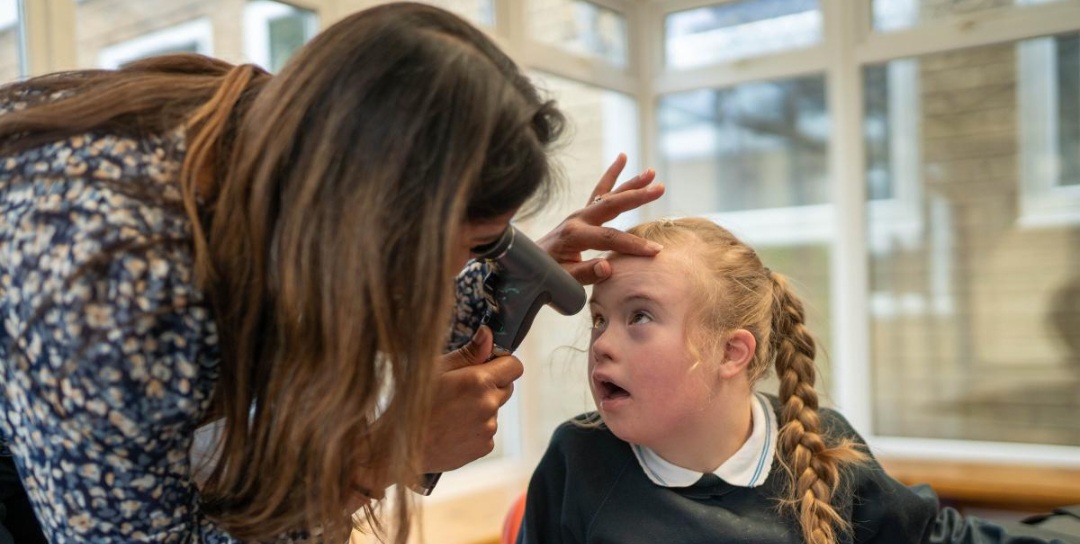
Specialist optometrists and dispensing opticians visit children in familiar school surroundings. Assessments can be adapted to communication and sensory needs, and children do not have to be able to read or speak to have their vision assessed.
The service goes beyond basic vision screening. It can provide comprehensive eye care, spectacles and written information for families and education professionals explaining a child's visual needs and the support they may require.
SeeAbility says it is also committed to providing spectacles without cost to families through the service and supporting children to become comfortable wearing them.
Why this matters for SEND inclusion
There's a broader lesson here.
Inclusion isn't always about asking children with additional needs to become better at accessing systems designed for everybody else. Sometimes the system needs to change the way it works.
Bringing eye care into special schools removes several potential barriers at once: travelling to appointments, coping with unfamiliar clinical environments and finding practitioners experienced in communicating with children with complex needs.
SeeAbility has been developing this approach since 2013. Its work has included adapting assessments to individual pupils; practitioners have previously described conducting parts of assessments in art rooms, tents and other environments where children felt comfortable.
The latest expansion therefore isn't simply about increasing the number of eye tests. It's an example of what can happen when health and education services are designed around the needs of the children using them.
From London to a national ambition
The scale is considerable.
The expanded service has the potential to reach almost 30,000 children in London. From November, it is due to extend across areas including the Thames Valley, Hampshire and the Isle of Wight, Surrey, Sussex, Kent and Medway, potentially reaching another 40,000 children. Schools need to opt into the service.
The development also sits within a wider NHS rollout of specialist eye care to special schools nationally.
For SEND families and professionals, perhaps the most important message is a simple one: difficulties with learning, communication or behaviour shouldn't automatically be assumed to stem from a child's disability or additional needs.
Sometimes a child may simply be struggling to see.
And if changing where and how we provide an eye test can uncover that problem, it demonstrates how powerful genuinely accessible services can be.
For thousands of children, better inclusion could begin with something as simple as seeing their classroom clearly.