World First SEND Racing Team!
30 September 2026 · 8 min read
Nicolas Hamilton Wants to Build a Disabled and Neurodiverse Racing Team – And That Could Change More Than Motorsport
When we talk about disability in sport, the conversation often focuses on the athlete. We celebrate the disabled person who gets onto the track, into the swimming pool or onto the pitch, and rightly recognise what they've achieved.
But what about everybody else?
What about the disabled mechanic? The neurodivergent engineer? The wheelchair user who wants to work in race strategy? The disabled teenager who loves motorsport but has absolutely no interest in becoming a racing driver?
British racing driver Nicolas Hamilton is now trying to take that conversation beyond the person sitting behind the wheel.
Hamilton, who has cerebral palsy and became the first disabled driver to compete in the British Touring Car Championship in 2015, has announced a partnership with Royal London aimed at improving disability and neurodiversity inclusion across motorsport. At the centre of that ambition is something particularly interesting: exploring the creation of what is intended to become the first fully disabled and neurodiverse racing team.
It's an ambitious idea and, importantly, Hamilton isn't pretending all the answers have already been found. He has acknowledged that the team is still an ambition and that there are practical questions to work through before anyone can say exactly what it will look like.
But the thinking behind it could be much more significant than simply creating another racing team.
It's about changing who gets to believe motorsport belongs to them.
Hamilton has spent his career adapting
Nicolas Hamilton was born with spastic diplegia cerebral palsy, a condition that affects his movement and coordination. He has spoken publicly about the physical challenges he experienced growing up and the work required to pursue a career in racing.
Motorsport wasn't designed around his disability, so Hamilton had to adapt the way he participated in it.
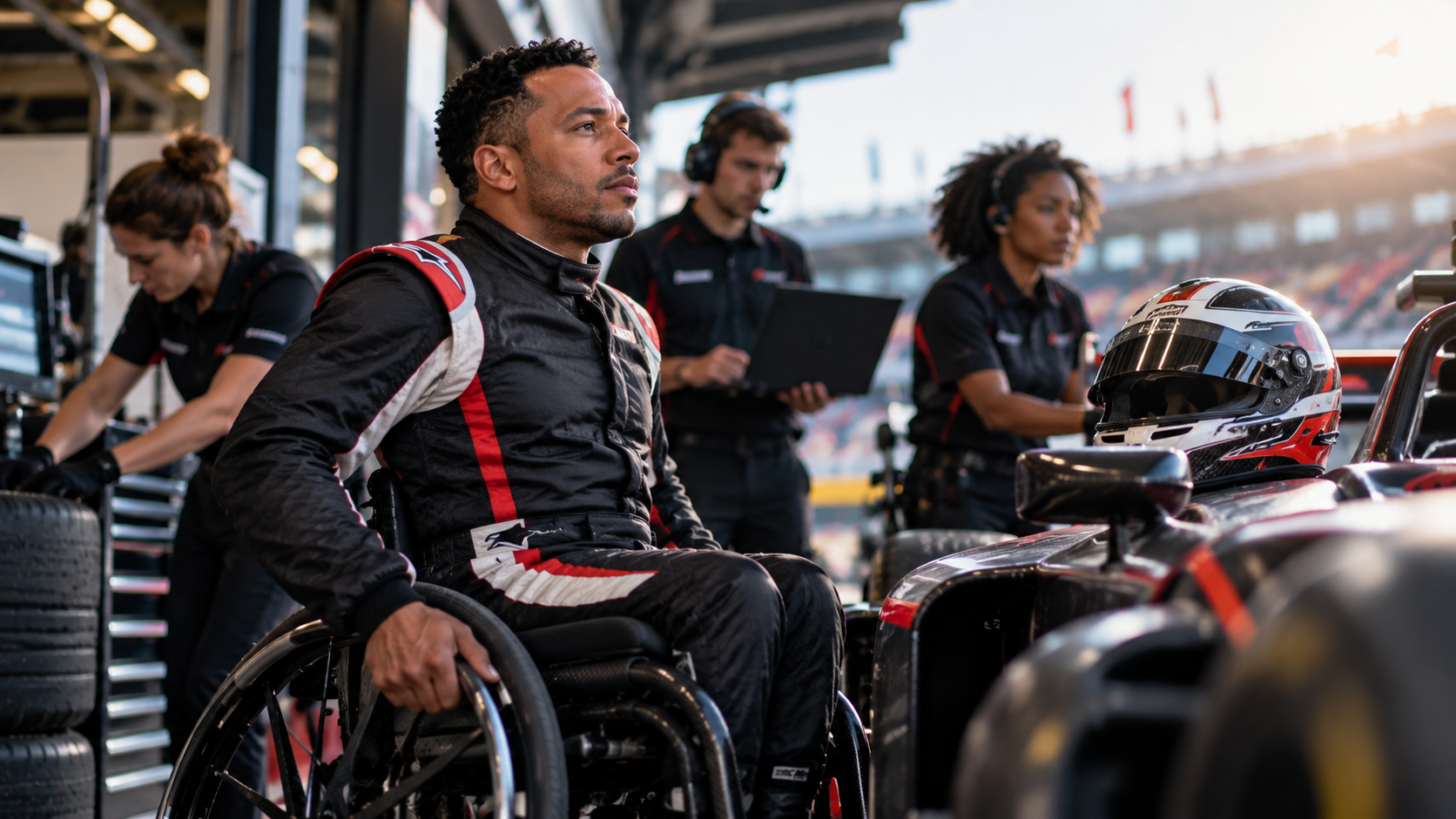
His race cars use modified controls that allow him to compete directly against non-disabled drivers. Rather than entering a separate disability category, Hamilton has spent his career racing in mainstream motorsport, including the highly competitive British Touring Car Championship.
In 2015, he became the first disabled driver to compete in the championship. He later became the first disabled driver to score BTCC championship points and has continued building his career from there.
That history matters because Hamilton's latest ambition isn't coming from somebody standing outside motorsport and asking the industry to become more inclusive. It's coming from somebody who has spent years inside it, experiencing both the opportunities that adaptation can create and the barriers that remain.
Hamilton has described motorsport as giving him independence and purpose, but he has also spoken about frequently being the only disabled person in the environments he entered.
That experience appears to have shaped the question he's now asking: if motorsport could adapt sufficiently to allow him to compete, why couldn't it adapt to create opportunities for many more disabled and neurodivergent people throughout the sport?
A racing team is much bigger than its driver
This is where the idea becomes particularly exciting.
When most of us watch motorsport, our attention naturally goes to the driver. But behind every car is a huge network of people.
There are engineers, mechanics, aerodynamic specialists, data analysts, hospitality staff, communications teams, logistics specialists, strategists, designers and countless other people required to make a race weekend happen.
Hamilton has specifically discussed the possibility of creating pathways into areas such as engineering, hospitality and aerodynamics, potentially working with disability organisations to identify people interested in motorsport and help them develop the skills necessary to enter the industry.
That changes the conversation considerably.
Instead of asking, “How can we get a disabled person into a racing car?”, the question becomes, “How can disabled and neurodivergent people become part of motorsport?”
Those are very different ambitions.
One creates representation.
The other begins creating an ecosystem.
Inclusion is more than putting someone in front of a camera
There is an important lesson here for businesses far beyond motorsport.
It's relatively easy for an organisation to celebrate disability inclusion when there is a successful disabled person standing on a podium. It's much harder to examine recruitment, workplaces, training, facilities and career pathways and ask why disabled people aren't already represented throughout the organisation.
Hamilton's proposed project has the potential to explore those less visible barriers.
For one person, the barrier might be physical access to the paddock. For somebody else it could be recruitment processes, inaccessible training materials or working practices that haven't considered neurodivergent employees. Another person might simply have never seen anybody like themselves working in motorsport and therefore never considered it a realistic career.
Not every solution requires futuristic technology.
Sometimes inclusion means adapting a vehicle.
Sometimes it means making a workplace physically accessible.
Sometimes it means changing how somebody is trained or how instructions are communicated.
Sometimes it means flexible working practices.
And sometimes it simply means opening a door that has traditionally remained closed because nobody thought to ask who was missing.
Adaptation doesn't reduce performance
Hamilton's career also challenges an assumption that appears repeatedly whenever accessibility is discussed: that adapting something for a disabled person somehow means lowering the standard.
It doesn't.
Hamilton hasn't asked the other BTCC drivers to slow down because he has cerebral palsy. His car has been adapted so that he can control it effectively, and then he competes.
That's an important distinction.
Accessibility isn't necessarily about making the challenge easier. Very often, it's about removing an unnecessary barrier so the person can take on the same challenge in a way that works for them.
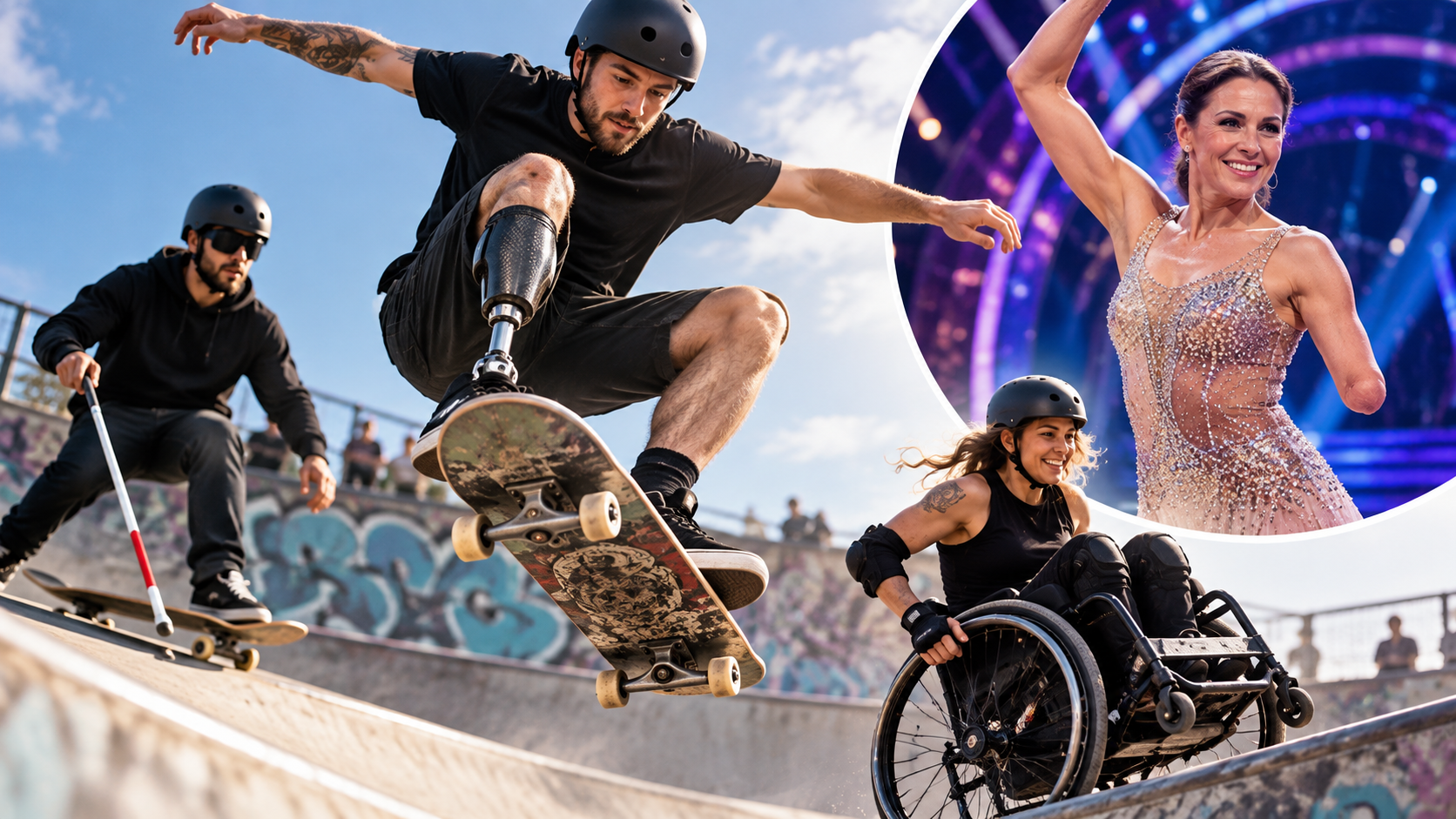
We've seen this principle across adaptive sport. Prosthetic limbs allow athletes to compete. Specialist wheelchairs allow people to play basketball or tackle skateparks. Audio description can make visual sporting experiences accessible to blind spectators. Modified controls can allow a disabled driver to operate a racing car.
The adaptation changes access to the activity.
It doesn't automatically change the ambition.
Hamilton's proposed racing team could take that philosophy from the driver and apply it to the workplace surrounding him.
Neurodiversity is an important part of the plan
It's also notable that Hamilton isn't talking exclusively about physical disability.
His ambition specifically includes neurodivergent people.
That's significant because conversations about accessibility can easily become dominated by things we can physically see: ramps, wheelchairs, accessible toilets, lifts and parking spaces. Those things are extremely important, but accessibility is much wider than the built environment.
A genuinely inclusive workplace may also need to think about communication, sensory environments, recruitment processes, training methods, working patterns and how information is presented.
A neurodivergent employee may not need a ramp or modified piece of equipment at all. Their barrier could be a working environment or process designed around one particular way of thinking, communicating or processing information.
If Hamilton's project develops as intended, one of its most interesting challenges will therefore be demonstrating what inclusion looks like when different people require completely different adaptations.
There won't be one accessibility solution.
There rarely is.
From being the only disabled person to creating opportunities for others
Hamilton has spoken about repeatedly finding himself as the only disabled person in the room, whether at school or later within motorsport.
That experience is something many disabled people will recognise.
Being the first person through a door can be an achievement, but remaining the only person through that door isn't necessarily progress.
Real change happens when the pathway becomes easier for the person coming next.
Hamilton has already demonstrated that a driver with cerebral palsy can compete in the British Touring Car Championship using modified controls. His next ambition appears to be using that visibility to create opportunities beyond his own career.
The partnership with Royal London is intended to explore what practical support would be required to make that happen, including the possibility of working with organisations such as Scope to reach disabled people who might be interested in motorsport careers.
There are still plenty of unanswered questions. Hamilton himself has acknowledged that the feasibility of a fully disabled and neurodiverse racing team has to be explored. How recruitment would work, how the team would be structured and what adaptations different employees would require will all need careful consideration.
But perhaps that's part of what makes the project valuable.
Accessibility improves when organisations stop waiting for somebody else to have all the answers and start asking disabled people what would make participation possible.
Why visibility still matters
There is another reason projects like this matter.
A young disabled person can only choose from the futures they know exist.
If every mechanic they see is non-disabled, every engineer they meet is non-disabled and every racing driver on television is non-disabled, motorsport may never feel like somewhere they belong.
Then somebody like Nicolas Hamilton appears.
Suddenly a disabled racing driver exists.
If his next ambition succeeds, perhaps the next generation will also see disabled engineers, mechanics, strategists and team members.
Representation alone doesn't create accessibility, but it can change what somebody imagines for themselves.
The next step is making sure the opportunity behind that representation is real.
Accessibility should create choices
Perhaps the most important thing about Hamilton's ambition is that it isn't really about proving disabled people can work in motorsport.
Disabled people shouldn't continually have to prove their value before being offered an opportunity.
It's about asking whether unnecessary barriers have prevented talented people from entering an industry in the first place.
Some disabled people will never want to go anywhere near a racetrack. Others might dream about it.
Accessibility is about making sure disability isn't the thing that makes that decision for them.
Hamilton's own career demonstrates what can happen when technology, adaptation and determination come together. His car works differently because his body works differently, but once he's on the grid, he's there to race.
Now he's asking whether that same thinking can be applied to the entire team behind the car.
If it can, the most important result might not be another podium or championship point.
It could be a disabled young person looking at a motorsport paddock and, for the first time, seeing somewhere they could actually belong.