11/11: A Day of Big Deals and Big Opportunities!

Published · 10 min read
The Spending Power of an Inclusive Community
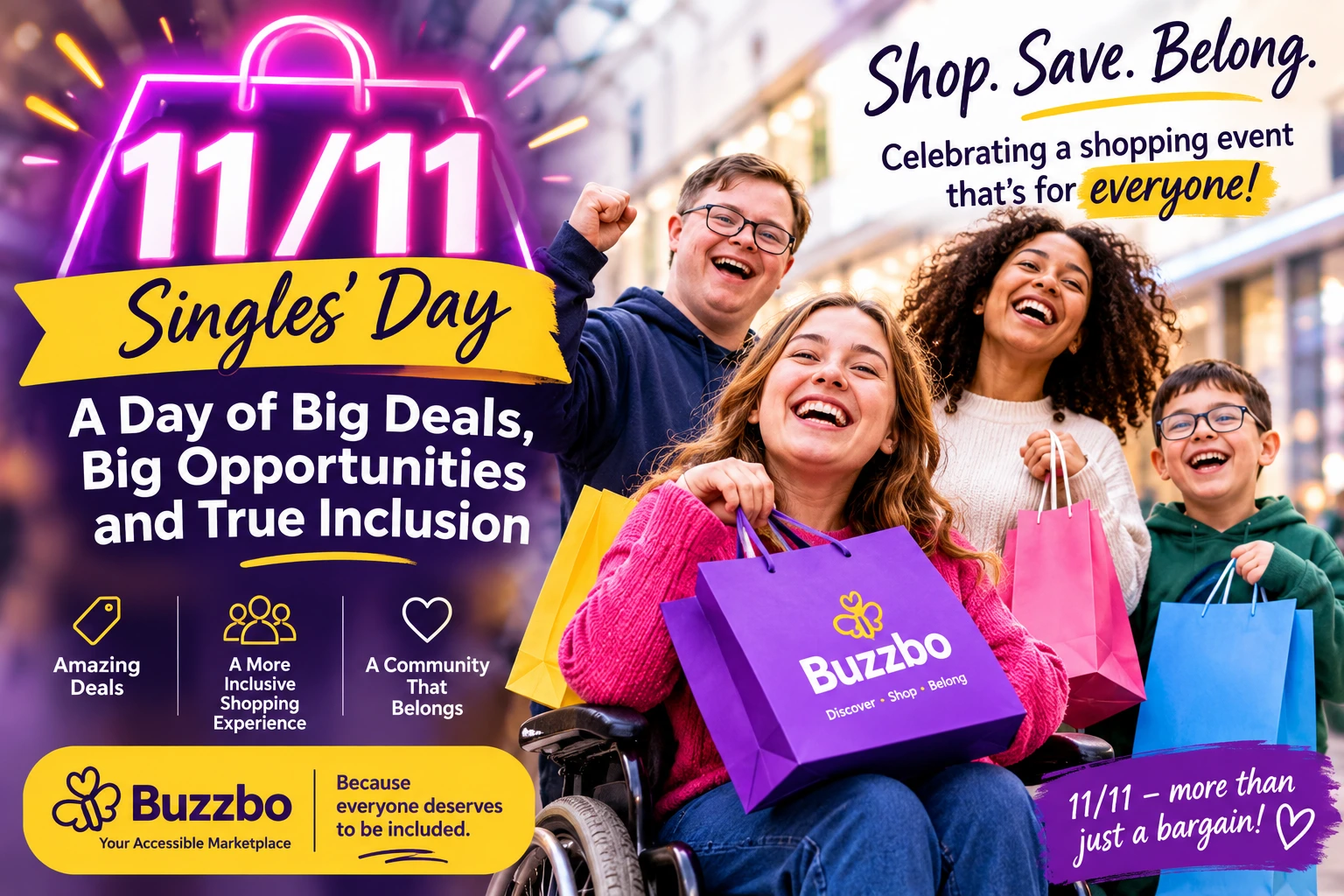
Every year, 11 November brings one of the biggest shopping events in the global retail calendar. Known as Singles' Day, or 11/11, it has grown from a celebration of single people into a huge international shopping occasion, with retailers offering special deals, limited-time promotions, exclusive products and online shopping events. For bargain hunters, it is an exciting opportunity to get ahead with Christmas shopping, treat themselves to something they've had their eye on, or discover new brands and businesses.
But there is another opportunity sitting at the heart of 11/11, and one that deserves just as much attention: the opportunity for businesses to connect with a community of customers whose spending power, loyalty and influence are enormous, but whose needs and preferences are not always considered when shopping experiences are designed.
For people with disabilities, additional needs and neurodivergent people, as well as the families, carers and supporters around them, shopping is about much more than finding the best price. It is about being able to browse comfortably, understand what is being offered, navigate a website or venue without unnecessary barriers, and feel confident that a business has considered them. When those things come together, a shopping experience can become genuinely enjoyable — and businesses have the chance to build relationships with customers who want to come back.
What can shoppers expect on 11 November?
This year, 11/11 falls on Wednesday 11 November 2026. The event has its roots in China, where the date was chosen because the four number ones represent being single. What began as a light-hearted celebration among university students grew into a major shopping festival after Alibaba embraced it commercially, turning it into a huge annual online retail event. Today, the idea has spread internationally, with shoppers looking out for discounts across fashion, beauty, technology, homeware, toys, gifts and much more.
One of the biggest confirmed UK-facing promotions this year is from AliExpress, which has launched its biggest-ever UK Singles' Day shopping event, with platform coupons and additional PayPal benefits advertised as part of the promotion. The wider 11.11 campaign is running across November, rather than being limited to the 24 hours of 11 November. Shoppers can expect offers to appear before the day itself and continue afterwards, so it is worth keeping an eye on individual retailers for their latest terms and prices.
It is worth being clear that not every retailer has announced a specific 11/11 promotion, and a business having a sale in November does not automatically mean it is officially participating in Singles' Day. At the time of writing, I could verify AliExpress's UK campaign, but I couldn't confirm a list of UK physical venues or other retailers that are both running a specific 11/11 event and publicly promoting a dedicated disability-access initiative. That doesn't mean other businesses won't have offers; it means we should not present their accessibility work as part of an 11/11 campaign unless they have actually confirmed that connection.
The Purple Pound: a community with enormous spending power
There is a powerful business opportunity here that goes far beyond one day of discounts. In the UK, the spending power of households that include at least one disabled person is commonly known as the Purple Pound. A UK Parliament report cites an estimated 16 million disabled people in the country and puts the combined spending power of households with at least one disabled person at approximately £274 billion a year. That figure represents a substantial customer base, and it is a reminder that accessibility is not a niche consideration. It matters to millions of people and to the families and households who shop, plan and make purchasing decisions together.
It is also important to recognise that this spending power is not limited to products specifically designed for disabled people. Families are buying groceries, clothing, electronics, furniture, gifts, days out, holidays, toys, personal care products and all the everyday things that every household needs. They may be buying for themselves, for a disabled child or adult, for a partner, or for someone they support. A parent looking for a birthday present, a carer ordering household essentials, or a disabled customer choosing a new outfit is still a customer with ordinary interests, tastes and expectations. They want choice, quality, good service and a shopping experience that works for them.
When a business makes its website easier to navigate, provides clear product information, offers helpful customer support or makes its premises more accessible, it is not simply doing something kind. It is making it easier for customers to discover the business, feel confident enough to buy, and return in the future. Accessibility can build trust, loyalty and positive word of mouth, while opening the door to customers who might otherwise struggle to engage with that business.
Businesses showing what more inclusive shopping can look like
There are already some encouraging examples of retailers taking practical steps to make shopping more welcoming for disabled and neurodivergent customers. These are worth highlighting because they show that accessibility can be built into everyday retail, rather than treated as something that only needs attention on special occasions.
Primark is a particularly interesting example. In May 2026, it announced that sensory-friendly shopping hours would be introduced across all its stores in Great Britain. During the first hour of trading every Saturday, stores reduce noise, lower till sounds, avoid in-store announcements and have specially trained colleagues available to help. Primark has also expanded its adaptive clothing range, including adaptive swimwear developed with designer Victoria Jenkins, and provides AccessAble guides to help customers plan visits. These are meaningful steps towards making a mainstream shopping environment more comfortable and accessible.
Morrisons has also developed its Quieter Hour initiative, which is designed to support customers who may find the usual supermarket environment overwhelming. Participating stores reduce background music and announcements, turn down checkout sounds and, where possible, lower lighting. The initiative is not just for autistic customers; Morrisons recognises that people with sensory sensitivities, sight or hearing impairments and other access needs can all benefit from a calmer shopping experience. It has also introduced sensory support boxes in partnership with the National Autistic Society.
At Currys, the focus has included helping customers communicate their access needs before visiting a store. Its partnership with WelcoMe trialled a system that allowed disabled customers to share information about the support they might need ahead of a visit, giving colleagues the opportunity to prepare. Currys has also run Quiet Hour initiatives to make the in-store environment more comfortable for customers affected by noise, lighting and other sensory experiences.
And Wickes publicly sets out accessibility commitments covering its website, store layouts and customer service. These include attention to readable colours and font sizes, image descriptions for screen readers, accessible store facilities and staff support for customers with different needs.
These examples are not being presented as confirmed 11/11 event partners; they are examples of retailers demonstrating how inclusion can be part of the customer experience throughout the year. They show that businesses can make thoughtful changes in different ways, and that there is no single template for getting accessibility right.
There is still an opportunity for more businesses taking part in major shopping events to bring these two things together: exciting offers and genuinely accessible experiences. Imagine being able to browse a special 11/11 promotion on a website that works smoothly with a screen reader, find clear product descriptions, understand delivery options without confusion, or visit a venue that offers a quieter shopping period and staff who know how to provide support. That is the sort of experience that can help more customers take part with confidence.
Why accessibility matters online as much as in person
For many people with disabilities or additional needs, online shopping offers freedom and flexibility. It can mean avoiding a crowded shop, taking time to compare products, using assistive technology, or shopping at a time that suits their routine. For others, visiting a physical venue is an important part of the experience, but they may need accessible entrances, suitable facilities, seating, clear signage, sensory information or a little extra support from staff.
A business can have a fantastic product and a brilliant offer, but if a customer cannot navigate its website, understand its information or comfortably access its premises, that customer may never get as far as making a purchase. Research by the Research Institute for Disabled Consumers and Which? has highlighted barriers disabled people can experience with online ordering, deliveries and returns. The research also found that some retailers handled customer requests and reasonable adjustments much better than others, demonstrating how much difference clear communication and a willingness to help can make.
This is where the opportunity becomes especially exciting. Businesses do not need to completely reinvent what they do to make a difference. Sometimes it starts with making information easier to find, explaining access arrangements before a customer visits, offering different ways to contact customer services, or asking disabled customers what would make their experience better. Small changes can make a big difference, and listening to the people who use a service is one of the best ways to understand what works.
Where Buzzbo comes in
This is exactly why we created Buzzbo.
We wanted to build something that puts people with additional needs, disabilities and different access requirements at the heart of the experience from the very beginning. Buzzbo is not simply another marketplace with accessibility added as an afterthought. The platform has been built around the people who will use it, with the intention of making it accessible to view, navigate and explore.
We believe people should be able to discover businesses, products, services and events without having to fight their way through confusing layouts, inaccessible information or unnecessary barriers. We want customers and families to find things that are relevant to their lives, discover new opportunities and connect with businesses that understand the importance of inclusion.
But Buzzbo is also about giving businesses a chance to reach an audience they may not currently be reaching. Whether you are an independent online seller, a specialist retailer, a service provider, an event organiser or a physical venue, there is an opportunity to put what you offer in front of people who are actively looking for accessible, inclusive and welcoming places to spend their money.
And this is important: you do not have to be a disability-specific business to be relevant to the disability community. A clothing shop, toy seller, café, beauty business, leisure venue, gift shop or homeware retailer could all have something that a disabled customer or their family would love. What matters is helping people discover you and giving them the information they need to make an informed choice.
By listing on Buzzbo, vendors, sellers and event organisers can showcase what they offer to an audience that is often overlooked in mainstream marketing. You can explain what makes your products or services suitable, share the access information customers need, and help people discover experiences they might not otherwise have known existed.
Make 11/11 about more than a bargain
Of course, we want everyone to enjoy the excitement of 11/11. Find those special offers, discover new brands, support independent businesses and enjoy the thrill of finding something you've been looking for. Shopping should be fun, and everyone deserves the opportunity to join in.
But perhaps this year, we can also think a little bigger. We can recognise that disabled people, neurodivergent people and families with additional needs are not a small or separate group of consumers. They are a huge part of our communities, with interests, aspirations and spending power that deserve to be recognised. They are customers, supporters, gift buyers, families and loyal shoppers who want the same choice and enjoyment as everyone else.
For businesses, 11/11 is a great opportunity to attract attention and introduce people to what you do. Buzzbo can help you take that opportunity further by making your business visible to a community that is actively looking for places, products, services and experiences that consider their needs.
We created Buzzbo because we believe inclusion should open doors, not create extra hoops for people to jump through. We want to help customers find businesses that welcome them, and help businesses find customers they may not yet have connected with.
So, this 11/11, let's celebrate more than the deals. Let's celebrate the people behind the purchases, the families who shop together, the businesses making positive changes and the opportunities that open up when everyone is included.
If you are a business, seller, venue or event organiser, we'd love you to be part of it. Come and discover Buzzbo, explore the marketplace and find out how you can get listed.
Visit Buzzbo.co.uk and help us make shopping and discovering new experiences more inclusive for everyone.