Purple Tuesday: Why Building a More Accessible World Matters to Everyone

Published · 9 min read
Accessibility, inclusion and the enormous opportunity businesses are missing.
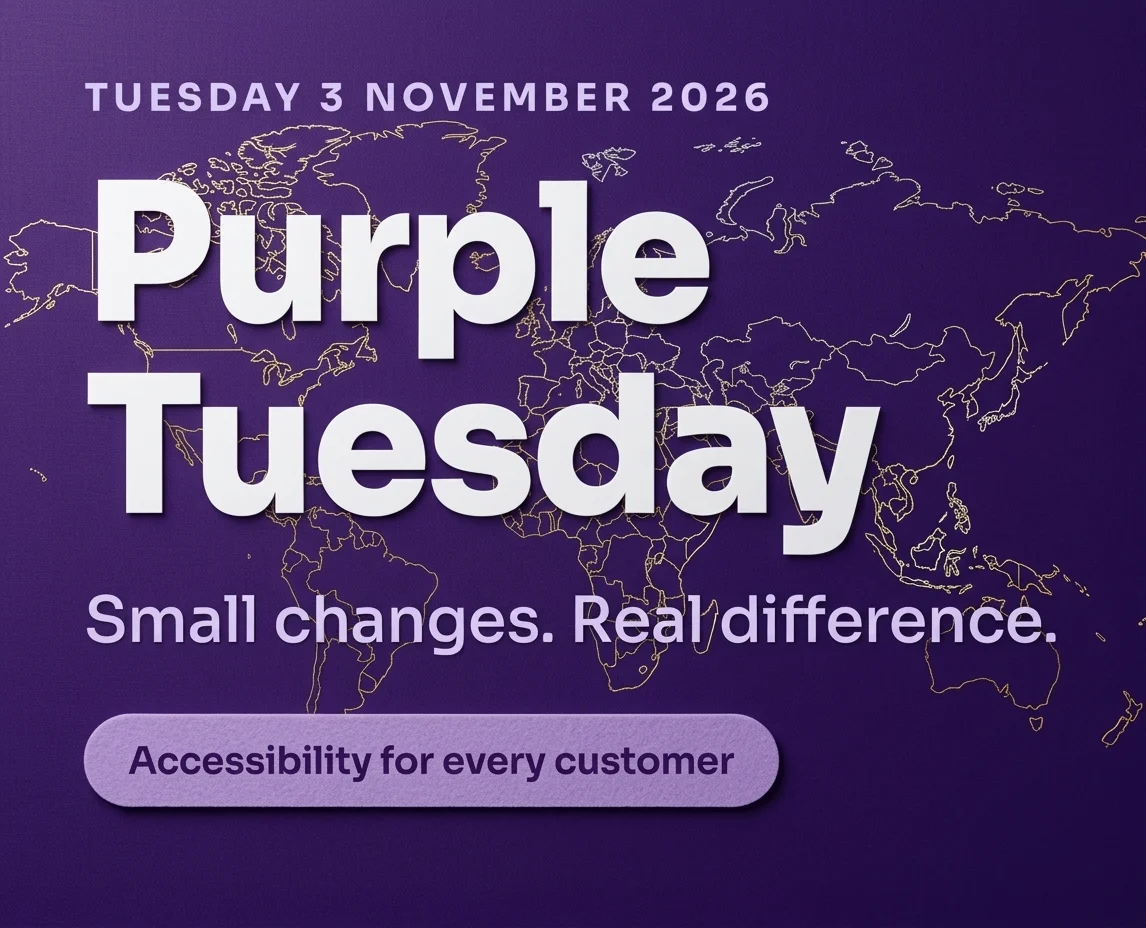
A more inclusive world doesn't happen by accident. It happens when businesses, organisations and communities take the time to understand the barriers people face and make a conscious effort to remove them. That is the thinking behind Purple Tuesday: a global movement that puts accessibility and the experiences of disabled people firmly in the spotlight.
Although it began in the UK, Purple Tuesday has grown into an international campaign, bringing together organisations from different countries and industries. Its message is relevant everywhere: disabled people should be able to shop, work, travel, communicate and enjoy everyday experiences with the same confidence, choice and independence as anyone else.
And this is about much more than a single day of awareness. It is about encouraging lasting changes in the way businesses think, design their services and welcome their customers.
The scale of disability is bigger than many people realise
According to the World Health Organization, approximately 1.3 billion people worldwide experience significant disability. That's around one in six people. It is a huge part of the global population, yet accessibility is still too often treated as a specialist consideration rather than a fundamental part of good business and good design.
Disability also doesn't look the same for everyone. It can affect mobility, vision, hearing, communication, learning, memory, mental health and the way someone experiences their surroundings. Some disabilities are immediately visible; others are not. Needs can also change throughout a person's life.
For one customer, accessibility might mean a step-free entrance. For another, it could mean a quieter environment, a website that works with a screen reader, clear signage, a larger-print menu or simply having a member of staff who understands how to offer support.
The important point is that there is no single definition of an accessible experience. Businesses need to think about the different people using their services and make it easier for everyone to participate.
The spending power businesses cannot afford to overlook
There is also a significant economic reason why accessibility deserves attention.
The spending power of disabled people and their households is often referred to in the UK as the Purple Pound. A widely quoted estimate put its value at £274 billion a year, but research published by the University of Bristol's Personal Finance Research Centre and the Money Advice Trust updated the estimate to approximately £446 billion a year, based on 2023/24 data. The researchers also explain that these figures are estimates and should be interpreted carefully.
The opportunity extends far beyond the UK. The Return on Disability Group's 2024 Global Economics of Disability report estimates that people with disabilities have more than $2.6 trillion in disposable income across North America and Europe alone. When friends and family are included, the report estimates a global disability market worth $18.3 trillion. These are market estimates rather than guaranteed sales figures, but they illustrate the scale of the community and its wider influence on purchasing decisions.
This matters because customers don't make decisions based solely on price or product. They also consider whether a business understands their needs, whether they can use its website, whether they feel comfortable visiting its premises and whether they are treated with respect.
When those experiences fall short, customers may go elsewhere. When businesses get them right, they can build trust, loyalty and positive recommendations.
Accessibility is therefore both a social responsibility and an opportunity to serve customers better.
What does good accessibility look like in practice?
The good news is that businesses don't have to start from scratch. Around the world, some well-known organisations are showing how accessibility can be built into products, services and everyday customer experiences.
Microsoft is a strong example of inclusive technology. Its accessibility work includes Live Captions, which turn spoken words into on-screen text, and Immersive Reader, which helps people customise how they read digital content. These tools can support people with hearing loss, dyslexia and other access needs, while also helping people who simply prefer information presented differently. Microsoft also promotes inclusive design: involving people with disabilities in the development process rather than trying to add accessibility at the end.
You can explore its work through Microsoft Inclusive Design and Microsoft Accessibility.
Apple has made accessibility a significant part of its technology offering. Features such as VoiceOver, which reads screen content aloud, Assistive Access, which simplifies device interfaces, and built-in captioning help people with different visual, hearing, mobility and cognitive needs use its products. Its accessibility features demonstrate how technology can offer people more choice and independence, rather than expecting everyone to interact with a device in exactly the same way.
Explore the features at Apple Accessibility.
IKEA is another interesting example because accessibility needs to work across both physical and digital environments. In 2026, IKEA Finland began piloting assisted-shopping and app-based navigation at its Vantaa store, with the aim of helping customers with disabilities, particularly people who are blind or have low vision, navigate the shopping experience more independently. It is a good example of listening to customer needs and testing practical improvements rather than assuming one solution will work for everyone.
Find out more through Ingka Group.
These organisations are not being presented as perfect or as having solved every accessibility challenge. Their value is in demonstrating that accessibility can be considered at every stage of the customer journey, and that progress comes from continued listening, testing and improvement.
Why a global movement like Purple Tuesday matters
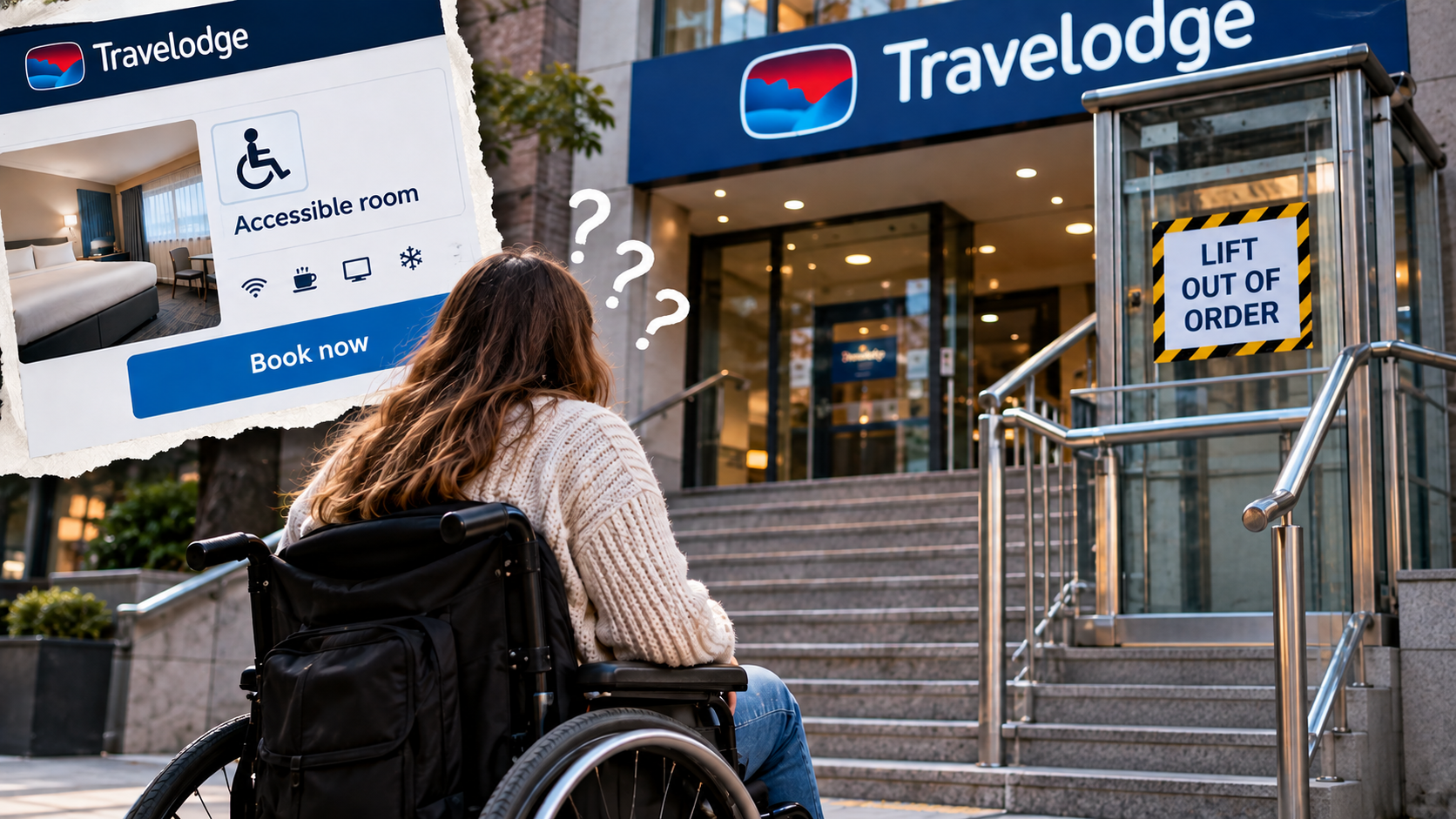
It is easy to think of accessibility as an issue for individual businesses to address on their own. But the barriers people experience are often repeated across different industries and countries. A website that cannot be navigated using assistive technology, a restaurant without accessible menus, a hotel with unclear accessibility information or a shop with an overwhelming sensory environment can all create the same underlying problem: people are being prevented from participating fully.
That is why a global movement matters. It creates a shared opportunity for organisations to learn from one another, recognise good practice and make commitments that extend beyond a single campaign day.
Purple Tuesday's own published 2024 impact figures reported participation from 7,000 organisations across nine countries, alongside more than 8,000 accessibility commitments. Its campaign also reported a reach of 36 million through social and traditional media. These figures show the potential of bringing businesses and communities together around a common purpose.
But the real measure of success isn't how many organisations use a hashtag or change their social media profile picture. It is whether people notice a difference when they visit a shop, book a holiday, use an app, attend an event or contact customer services.
Small changes can create much bigger opportunities
One of the most encouraging things about accessibility is that progress doesn't always need to involve expensive technology or major building work. Sometimes the most meaningful changes are surprisingly straightforward.
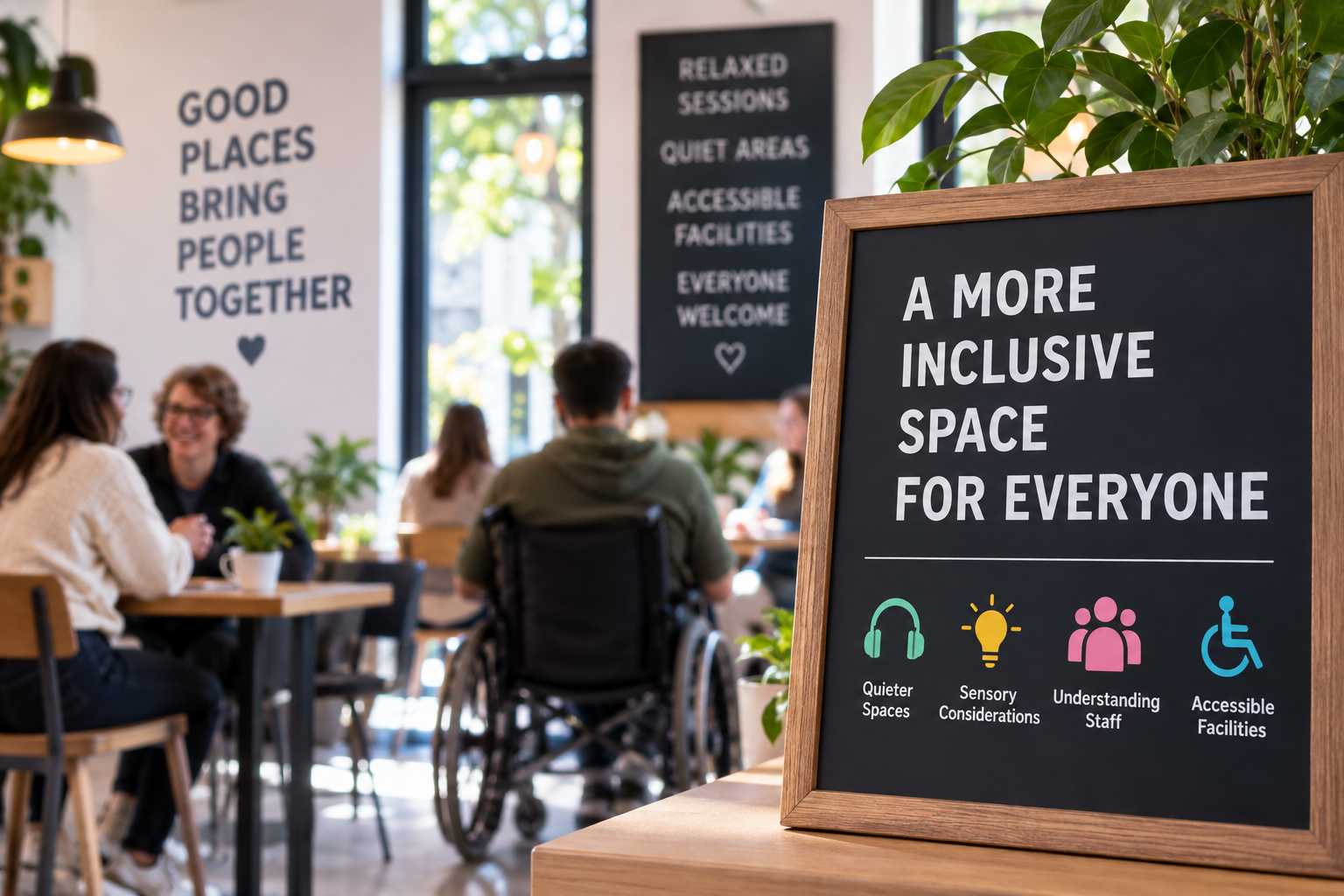
For a physical business, it might mean keeping entrances and aisles clear, making sure there is accessible seating, improving signs, providing a large-print menu or introducing a quieter time of day. It could be as simple as asking staff to offer assistance without making assumptions about what a customer can or cannot do.
For an online business, the opportunities are just as practical. Clearer website layouts, readable text, good colour contrast, descriptive image text, captions on videos and a checkout that works with a keyboard or screen reader can make a huge difference. Providing accessibility information before someone visits or makes a purchase can also help customers feel more confident about choosing your business.
Perhaps the most valuable change of all is to involve disabled people in the process. Ask customers what makes their experience difficult, listen to their suggestions and, where possible, test changes with people who have lived experience of the barriers you're trying to remove.
A business doesn't need to have every answer immediately. It does need to be willing to listen and improve.
Accessibility benefits more people than you might think
There is sometimes a misconception that accessibility improvements are designed for a small group of customers. In reality, many changes make everyday experiences better for a much wider audience.
Captions are useful not only for deaf customers but also for people watching videos in noisy environments. Clearer signs help people with learning disabilities, tourists and anyone unfamiliar with a building. Quieter shopping periods can support autistic customers, people with sensory sensitivities and those who simply find busy environments difficult. Simple, well-structured websites make life easier for almost everyone.
This is the value of inclusive design: when you consider different needs from the beginning, you often create a better experience for everybody.
There is also a workplace dimension. Businesses that make recruitment, working environments and internal communication more accessible can benefit from a wider pool of talent and help employees feel that they belong. Disability inclusion shouldn't stop at the customer-facing part of an organisation; it should be reflected in its culture, policies and opportunities too.
Accenture's 2023 research, conducted with Disability:IN and the American Association of People with Disabilities, examined 346 companies. It found that businesses leading on disability inclusion criteria achieved 1.6 times more revenue, 2.6 times more net income and twice the economic profit of other companies in the study over the period analysed. This is an association from a particular group of companies, not a guarantee that any individual accessibility measure will produce those results, but it reinforces the wider business case for taking inclusion seriously.
Where Buzzbo fits into the picture
At Buzzbo, this is exactly the kind of change we want to encourage.
We believe that accessibility information and useful resources should be easier to find. People with disabilities, additional needs and their families shouldn't have to search through countless websites, social media accounts and directories just to discover whether somewhere is suitable for them.
Buzzbo is about bringing those resources together under one roof. It is a place to help people discover accessible places, services, activities, organisations and information, while giving businesses an opportunity to share what they offer and demonstrate the steps they are taking towards inclusion.
We also want to help businesses understand that they don't have to be a large international organisation to make a difference. A small independent shop, a family-run café, a local service provider or an online retailer can all make positive changes. Sometimes, a simple improvement to the way information is presented or the way a customer is welcomed can have a lasting impact.
And by bringing useful information and examples together, we hope to make it easier for organisations to learn from one another and turn good intentions into practical action.
Make accessibility part of every day
Purple Tuesday is an important reminder, but its message shouldn't disappear once the day is over. Accessibility needs to be part of everyday decisions, from the way a website is designed to the way a customer is greeted, from the layout of a shop to the way a business communicates with its employees.
The statistics show just how many people are affected, and the economic figures demonstrate that businesses have a significant opportunity to do better. But behind every number is a person who wants to enjoy the same experiences, make their own choices and feel welcome without having to fight for access.
We don't need every business to make every change overnight. We need more businesses to start, to listen, to learn and to keep improving.
Because accessibility isn't just good for business. It's good for people.
And that is what Purple Tuesday is really about: creating a world where inclusion isn't an occasional initiative, but simply part of the way we do things.
At Buzzbo, we're proud to be part of that conversation. Let's make accessibility easier to find, share and put into practice.