Bonfire Night: When the Bangs, Bright Lights and Unpredictability Become Too Much

Published · 13 min read

Understanding the sensory impact of Bonfire Night and how we can make celebrations more inclusive for everyone.
For many people, Bonfire Night is one of the most exciting evenings of the year. The colourful explosions lighting up the sky, the crackling of the bonfire, the smell of toffee apples, the excitement of gathering with friends and family, and the anticipation of watching the fireworks burst into life.
It's a night filled with tradition, excitement and, for many, some really lovely memories.
But there's another side to Bonfire Night that we don't always talk about.
For many disabled people, neurodivergent people and those with additional needs, Bonfire Night can be an incredibly overwhelming, distressing and sometimes frightening experience.
And it's important that we recognise that.
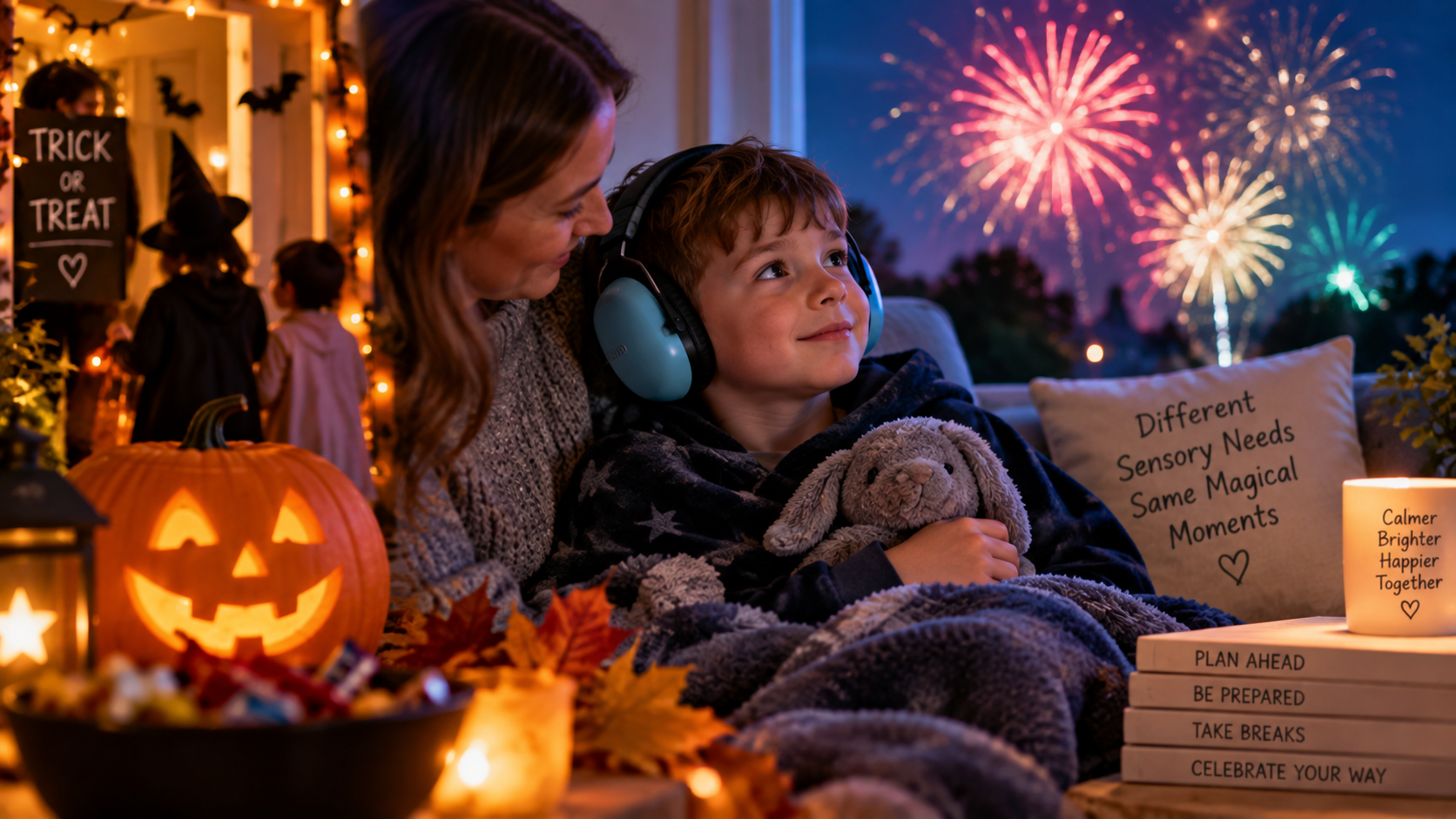
Because while one person is standing outside, watching the fireworks in absolute amazement, another might be inside with their hands over their ears, experiencing sensory overload, feeling frightened, struggling to regulate their emotions or desperately wishing the noise would stop.
Neither experience is wrong. But both deserve to be understood.
It's not just a loud noise. It's the unpredictability.
One of the biggest challenges with Bonfire Night is the unpredictability.
It's not simply about knowing that fireworks are going to happen. It's about not knowing exactly when that next bang is coming, how loud it's going to be, where it's going to come from or how long the noise will continue.
There might be a few seconds of quiet before an enormous explosion. There might be fireworks going off in the distance, followed by another display much closer to home. There might be unexpected bangs from individual fireworks being set off in nearby streets, gardens and open spaces.
For somebody with sensory sensitivities, this can be incredibly difficult to process.
Imagine trying to relax at home, watching television or enjoying a quiet evening, only to be repeatedly startled by sudden, explosive noises. You don't know when the next one is coming. You can't control it. You can't necessarily escape it. And even when the noise stops, you're left anticipating when it might start again.
That anticipation alone can be exhausting.
For some autistic people, people with ADHD, sensory processing differences, learning disabilities and other additional needs, unexpected sounds can trigger a significant stress response. The nervous system may interpret the noise as a threat, even when the person knows intellectually that they are safe.
It's also important to remember that sensory sensitivities aren't exclusive to autism or any one diagnosis. People with a range of disabilities, neurological differences, anxiety conditions and trauma experiences can find fireworks particularly difficult.
And it's not always something that somebody can simply get used to.
Understanding sensory overload
We often talk about sensory overload, but it's worth thinking about what that actually means.
Our brains are constantly taking in information from the world around us. We're processing what we can see, hear, smell, touch and feel, often without even consciously thinking about it.
For somebody who experiences sensory processing differences, that information can be much harder to filter, organise and regulate.
Now think about Bonfire Night.
There are explosive bangs, crackling noises, whistles, flashing lights, crowds talking, children shouting, music playing, smoke in the air, strong smells, bright colours and people moving around in every direction.
That's an enormous amount of sensory information happening all at once.
For somebody who is sensory-sensitive, it can feel as though every single one of those sensations is turned up to maximum volume.
And when the brain is already working incredibly hard to process everything around it, one more unexpected bang can be the thing that pushes someone into sensory overload.
This might look like:
- Covering their ears, sometimes tightly, to try to block out the noise.
- Becoming distressed, tearful, anxious or frightened.
- Trying to leave an environment as quickly as possible.
- Shutting down, withdrawing or becoming unable to communicate.
- Experiencing a meltdown or heightened emotional response.
- Becoming restless, agitated or unable to settle.
- Feeling physically exhausted after prolonged sensory stimulation.
It's important to understand that these responses aren't somebody being difficult, dramatic or deliberately disruptive.
They can be genuine responses to an environment that feels overwhelming and, at times, completely unmanageable.
And not everybody will show their distress in the same way. Some people might cry or become visibly upset, while others might go very quiet, withdraw or appear to be coping when they're actually struggling internally.
The impact doesn't begin and end with the fireworks
Something else we need to consider is that Bonfire Night isn't always just one evening.
For many people, the fireworks start well before 5 November and continue for days, sometimes even weeks.
There might be unexpected fireworks going off in the evenings leading up to Bonfire Night. There might be loud bangs during the day. There might be displays happening in neighbouring towns or people setting off fireworks in their gardens.
This means that the anticipation, anxiety and sensory impact can build over time.
Somebody might spend the entire day feeling on edge, waiting for the first bang. They might struggle to concentrate, relax, sleep or follow their usual routine because they know what's coming.
And for people who rely on routine, predictability and knowing what to expect, this disruption can be particularly challenging.
We should also remember that some people experience a heightened startle response or have previous experiences of trauma that make explosive sounds particularly distressing.
A sudden bang isn't necessarily just a noise to them. It can bring feelings of fear, panic or memories that they would much rather not revisit.
So when we talk about making Bonfire Night more accessible, we need to look beyond the actual firework display. We need to consider the wider environment, the build-up, the unexpected noises and the impact on people who may not even be attending an event.
How can we make Bonfire Night easier to navigate?
There isn't one universal solution, because everybody experiences sensory information differently. What works brilliantly for one person might not work for another.
However, there are some practical things that can help make the evening a little more manageable.
1. Prepare where possible
If somebody is attending an organised display, knowing what to expect can make a significant difference.
Find out what time the fireworks are due to start, how long the display is expected to last, whether there will be music or other entertainment, and what the environment will look like.
Visual schedules, social stories, photographs and simple explanations can help some people understand what is going to happen.
Of course, preparation cannot remove every unexpected noise, particularly when fireworks are being set off elsewhere, but it can help reduce some of the uncertainty.
2. Have ear defenders or noise-reducing headphones available
For some people, ear defenders or noise-cancelling headphones can make a huge difference.
They can reduce the intensity of the noise and help somebody feel more comfortable in an otherwise overwhelming environment.
It's important to remember that not everybody likes wearing something over their ears, so these should always be an option rather than an expectation.
3. Have an exit plan
Knowing that you can leave an environment at any point can make it feel much less daunting.
If you're attending an event, think about where the exits are, how easily you can get back to your car or transport, and whether you can move away from the crowds if things become too much.
Don't feel that you have to stay until the end just because you've bought a ticket or made plans.
Leaving early is absolutely okay.
4. Create a comfortable environment at home
For those who find fireworks particularly difficult, having a comfortable, familiar space can help.
This might mean closing windows and curtains, using familiar background music or television, having comforting sensory items nearby and sticking to familiar routines as much as possible.
Some people might prefer to use ear defenders, while others might find a familiar film or activity more helpful.
The important thing is to find what works for the individual.
5. Don't put pressure on somebody to enjoy it
This is perhaps one of the most important things to remember.
Not everybody has to enjoy fireworks. Not everybody has to stand outside and watch. Not everybody has to participate in Bonfire Night celebrations.
We shouldn't make somebody feel that they're missing out, being awkward or spoiling the fun because they find the experience difficult.
Let people experience the evening in whatever way feels safest and most comfortable for them.
How to make your business more accessible this Bonfire Night
This is something I'd particularly like businesses, venues and event organisers to think about.
If you're hosting a Bonfire Night event tomorrow, whether that's a large organised fireworks display, a pub event, a restaurant evening, a community gathering or a family-friendly celebration, have you thought about how accessible the experience is for people with disabilities and additional needs?
Accessibility isn't just about wheelchair ramps, accessible toilets and step-free entrances.
Those things are incredibly important, of course, but accessibility also includes sensory accessibility.
And with an event that involves explosive noises, flashing lights, large crowds and unpredictable sensory experiences, this is something that deserves serious consideration.
The good news is that there are practical adjustments businesses can make, including some that can be introduced at relatively short notice.
1. Create a designated quiet or chill-out space
If you do just one thing, consider creating a designated quiet space.
This could be a separate indoor room, a quieter area of your venue or a clearly identified space away from the main event.
Ideally, it should have:
- Comfortable seating, cushions or beanbags.
- Softer, reduced lighting.
- Minimal background music and noise.
- Space for people to sit with family members, carers or support workers.
- Access to sensory items such as fidget toys or stress balls.
- Clear signage so visitors know where to find it.
Most importantly, make sure people know that they are welcome to use it.
A quiet space shouldn't be somewhere people have to justify using or explain why they need it. It should simply be available to anyone who needs a break.
And remember, a room directly beside the fireworks or next to a loudspeaker isn't necessarily a quiet space just because you've put a sign on the door.
Think carefully about its location and how much noise actually reaches it.
2. Give people clear information before they arrive
One of the simplest and most effective things you can do is communicate.
Update your website and social media with information about what people can expect from your event.
Include:
- The exact or approximate time the fireworks will begin.
- How long the display is expected to last.
- Whether there will be loud music, flashing lights or other entertainment.
- Whether there will be loud bangs before the main display.
- Where the quieter areas are located.
- Whether ear defenders are available.
- Information about accessible parking, toilets and entrances.
- Whether visitors can leave and re-enter if they need a break.
Don't underestimate how helpful this information can be.
For somebody who experiences anxiety around unpredictable environments, knowing what to expect before leaving home can make the difference between attending an event and feeling unable to go at all.
3. Consider providing ear defenders
If your budget allows, having a small supply of ear defenders available for both children and adults is a brilliant practical adjustment.
Make it clear where people can collect them and whether they need to be requested from a member of staff.
You could even advertise this in advance so visitors know they don't necessarily need to bring their own.
And please remember that sensory needs don't stop when somebody reaches adulthood. Adults with sensory sensitivities deserve the same consideration as children.
4. Think about where you're positioning people
Not everybody wants to be right at the front of a fireworks display.
Some people might enjoy watching from further away, where the noise and intensity are reduced.
Consider whether you can provide a designated viewing area away from the main crowds, loudspeakers and busiest parts of the event.
Make sure there is enough room for wheelchair users and people with mobility aids, and that people can leave the viewing area easily without having to push through a tightly packed crowd.
If possible, provide seating for people who cannot stand for long periods.
5. Train your staff and volunteers
Accessibility isn't just about the physical environment. It's also about how people are treated.
Make sure your staff understand that somebody experiencing sensory overload might communicate differently, become distressed, need to move around or require some additional time and space.
They shouldn't automatically assume that somebody is being difficult or disruptive.
A little understanding can go a very long way.
Staff should know where the quiet space is, how to direct people towards it and how to offer support without overwhelming somebody with questions or unnecessary attention.
Sometimes, the most helpful thing you can do is give somebody space, remain calm and let them communicate what they need in their own time.
6. Make your event information genuinely accessible
Think about how you're sharing information.
Use clear language, avoid complicated instructions and make sure important information isn't communicated exclusively through loudspeaker announcements.
Consider providing written updates, visual signs and clear directions around the venue.
If there are changes to the schedule, communicate them as clearly and as early as possible.
For some visitors, knowing that the fireworks will start at 7pm and then be followed by a particular activity is much easier to process than vague announcements about things happening later in the evening.
7. Consider alternatives to traditional fireworks
This might not be possible for every event, but it's worth considering whether there are ways to offer an alternative experience.
Could you incorporate a quieter visual display, projections, illuminated installations or other light-based activities?
Could you offer a sensory-friendly session before the main event?
Could you provide a viewing area further away from the fireworks for people who want to enjoy the visual experience without being right next to the noise?
There are also low-noise fireworks available, although it's important to remember that low-noise doesn't mean silent. They can still produce sudden sounds and shouldn't automatically be advertised as suitable for everyone with sensory sensitivities.
The aim isn't necessarily to remove the traditional celebration. It's to create more opportunities for people to participate in a way that works for them.
8. Don't make accessibility an afterthought
One final point for businesses: please don't treat accessibility as something you only think about if somebody asks for it.
If you're advertising a family-friendly event, think about the families who might otherwise feel unable to attend.
If you're hosting a community celebration, think about the people in your community who experience sensory differences.
And if you're unable to make every adjustment this year, be honest about what you can offer and think about what you could improve for next time.
Even relatively small changes can make a meaningful difference.
Accessibility benefits more people than you might realise
It's easy to think that providing a quiet space, clearer information or a designated viewing area is something that only benefits a small number of people.
But these adjustments can make events more comfortable for so many people.
A quiet space might be helpful for an autistic visitor, but it could also benefit somebody with a learning disability, ADHD, anxiety, chronic fatigue, a neurological condition or somebody who simply needs a break from the crowds.
Clearer information can support people with learning disabilities, but it can also help families with young children and visitors who are unfamiliar with the venue.
Accessible viewing areas can support wheelchair users, but also people with limited mobility, older visitors and those who cannot stand for long periods.
When we make environments more inclusive, we often make them better for everybody.
And that's what accessibility should be about.
A little more understanding can make a big difference
Bonfire Night doesn't have to be an uncomfortable or frightening experience for everybody, and we certainly don't want to take away the enjoyment that so many people get from it.
But we do need to recognise that not everybody experiences the world in the same way.
For some, the fireworks are beautiful. For others, they're overwhelming.
For some, the anticipation is exciting. For others, it's anxiety-inducing.
And for some, what looks like a few minutes of entertainment can result in hours of distress, exhaustion and sensory overload.
So, as we head into Bonfire Night, let's be a little more mindful of the people around us.
Let's think about the unexpected bangs, the people who might be struggling behind closed doors, the families who are trying to prepare their children for an evening they find difficult, and the disabled people who would love to attend community events but don't always feel that those events have been designed with them in mind.
And if you're a business or event organiser, please consider what you can do to make your celebrations more inclusive.
You don't have to get everything perfect overnight. But you can start by listening, understanding and making small changes.
Because everybody deserves to feel welcome, included and considered.
Let's make Bonfire Night a celebration that thinks about everyone, not just the people watching the fireworks.