Halloween Without the Overwhelm

Published · 4 min read

How to Make Spooky Season Inclusive for Children with SEND
Pumpkins, costumes, spooky decorations, trick-or-treating and mountains of sweets. Halloween can be an exciting time of year, but for some children with special educational needs and disabilities, it can also bring a few unexpected challenges.
The flashing lights, unfamiliar costumes, loud noises and changes to familiar routines can make traditional Halloween celebrations difficult for children with sensory sensitivities or anxiety.
That doesn't mean children with SEND have to miss out on the fun. With a little thought and flexibility, Halloween can be adapted to suit a wide range of needs, interests and preferences.
The most important thing to remember is that there is no single right way to celebrate.
Let your child decide what Halloween looks like
One of the easiest ways to make Halloween more enjoyable is to involve your child in planning it.
Some children absolutely love spooky decorations, scary stories and dressing up. Others prefer the pumpkins, colourful lights and sweet treats without anything frightening.
Rather than assuming what your child will enjoy, give them opportunities to choose.
You might show them photographs of different activities, watch a Halloween-themed programme together or talk about which parts of the celebration sound exciting and which they would rather avoid.
Remember that your child doesn't need to participate in every traditional Halloween activity to enjoy the occasion.
Find a comfortable costume
Halloween costumes can be a particular challenge for children with sensory sensitivities.
Scratchy fabrics, tight elastic, face paint, masks and unfamiliar clothing can all feel uncomfortable. A child who usually enjoys dressing up might suddenly find a costume unbearable once they've worn it for more than a few minutes.
The answer is not to insist that they wear something simply because it's Halloween.
Choose comfortable clothing and build the costume around things your child already enjoys wearing. A favourite T-shirt, a soft cape or a simple accessory might be much more successful than a complicated outfit.
If your child doesn't want to dress up at all, that's absolutely fine too.
Make trick-or-treating more predictable
The idea of knocking on unfamiliar doors, speaking to strangers and walking around in the dark can be exciting for some children and stressful for others.
If your child would like to go trick-or-treating, consider planning a short route in advance. You could visit a few familiar neighbours, agree how long you'll be out and take a photograph of the houses you plan to visit.
Explain what will happen at each stage, including what your child might say or do when someone answers the door.
For children who find unexpected interactions difficult, you could practise the experience at home first.
And if trick-or-treating doesn't appeal, there are plenty of alternatives. You could arrange a sweet hunt around the house or garden, or simply enjoy some favourite treats together.
Think about sensory overload
Halloween environments can involve a lot of sensory input. Decorations may flash, music may be loud, costumes may be frightening and there may be more people around than usual.
For children who experience sensory overload, this can quickly become overwhelming.
Think about the environments you're planning to visit. If you're attending an organised event, contact the venue beforehand to ask about noise levels, lighting, quieter spaces and opportunities to leave if your child needs a break.
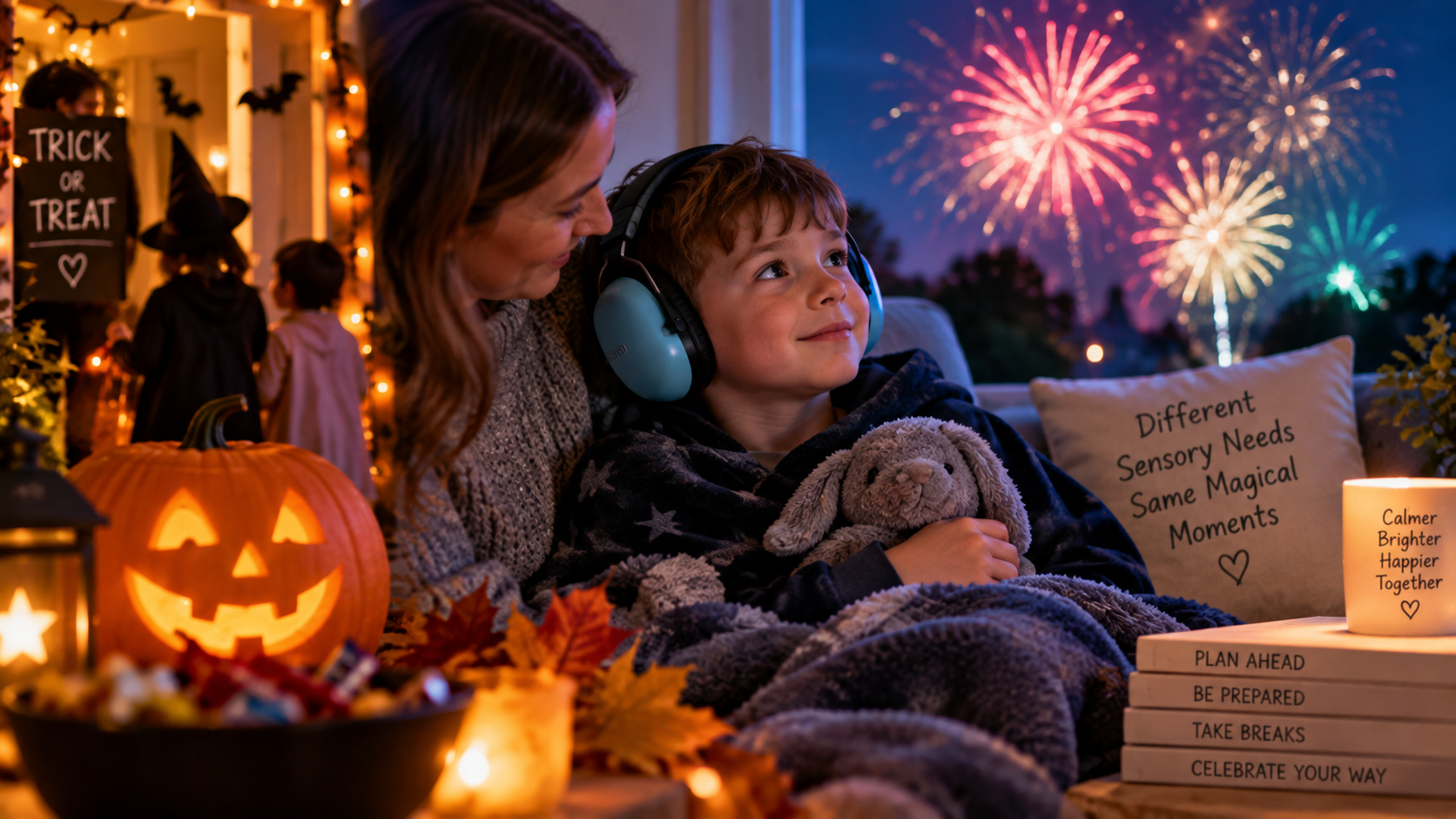
If your child uses ear defenders, sunglasses or other sensory tools, make sure they're available.
It's also worth remembering that some children seek out sensory experiences rather than avoid them. Your child might absolutely love the flashing lights and spooky sound effects. The important thing is to understand their individual preferences.
Create your own Halloween celebration at home
You don't need to go anywhere to enjoy Halloween.
A pumpkin decorating afternoon, spooky baking session or Halloween-themed film night can be just as exciting as attending a large event.
You could make Halloween biscuits, decorate the windows, create a treasure hunt or have a little party with favourite music and snacks.
For children who enjoy imaginative play, you might even create a mini haunted house using blankets, cushions and decorations.
The advantage of celebrating at home is that you can control the environment, keep familiar routines and adapt activities whenever necessary.
Help other people understand your child's needs
Sometimes the most difficult part of Halloween is managing other people's expectations.
Your child might not want to say trick or treat, wear a costume, make eye contact or accept a particular sweet. They might need more time to answer the door or prefer to communicate in a different way.
These differences are nothing to be embarrassed about.
If you're visiting friends or family, explain any important needs beforehand. A little understanding can help everyone feel more comfortable.
You might also consider putting a friendly note on your door if your child finds unexpected visitors difficult.
Remember that inclusion is about choice
Halloween should be enjoyable, not another occasion where children feel they have to meet expectations.
Some children will want to experience everything, while others will prefer a quiet evening at home. Both are perfectly valid ways to celebrate.
With a little preparation, a flexible approach and an understanding of your child's individual needs, there's no reason spooky season can't be a wonderful experience for the whole family.
So whether you're planning a big Halloween adventure or simply decorating a pumpkin in the kitchen, make it your own. After all, the best Halloween celebrations are the ones where everyone feels welcome.