Disabled Passenger Left Waiting on a Jet Bridge
29 September 2026 · 9 min read
What Went Wrong?
A disabled passenger's account of being left alone on a jet bridge after a United Airlines flight has attracted significant attention online, and it's not difficult to understand why. For disabled people who rely on airport assistance, the story touches on one of the biggest anxieties associated with flying: what happens when the assistance you've arranged simply isn't there when you need it?
The passenger, known online as Birdie, says she had requested wheelchair assistance for her journey from the United States to Vancouver, Canada. According to her account, the assistance had worked during an earlier connection, and the cabin crew on her final flight were also aware that she required help. Before landing, she says she checked with a flight attendant and was reassured that wheelchair assistance had been ordered for her arrival.
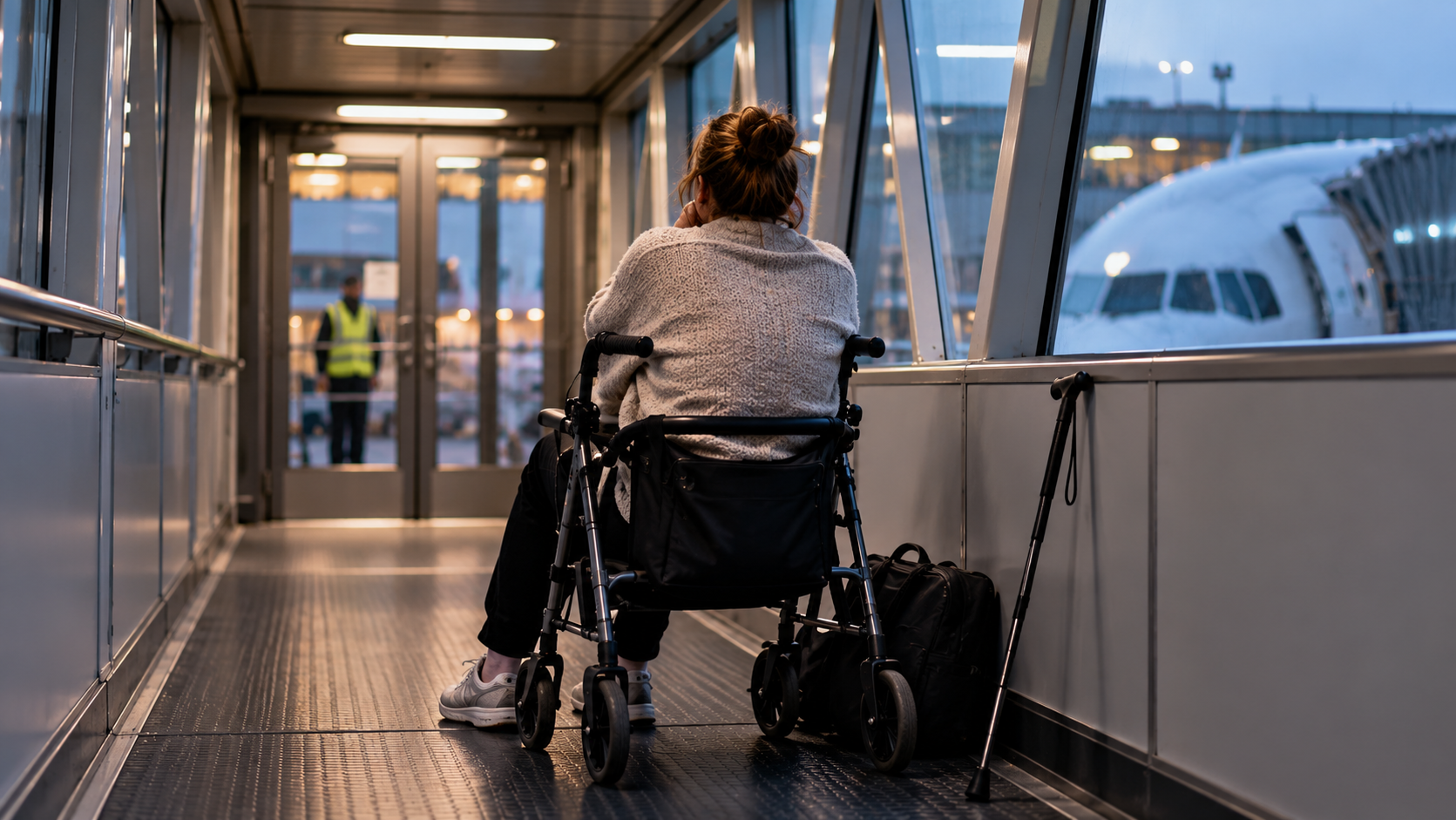
When the aircraft reached Vancouver, however, the wheelchair Birdie was expecting wasn't waiting for her. What followed appears to have been a breakdown somewhere between the different people and systems responsible for getting her safely from the aircraft into the terminal. Birdie says she was eventually left waiting alone on the jet bridge, with the terminal-side doors closed, while somebody went to find appropriate assistance.
She began recording the experience and posted it online. In the footage, Birdie can be seen sitting on her walker with her cane, explaining that she was shaking and didn't know when somebody would return. She estimates that she waited for around 20 to 30 minutes before someone eventually arrived with a wheelchair and helped her through the airport.
United Airlines has provided a different perspective on part of the incident. The airline says its Vancouver team responded once it became aware of Birdie's need for assistance and that an employee checked on her frequently while they waited for the person who was authorised to escort her through the airport. That distinction is important, because there is a difference between being completely forgotten and being left waiting while assistance is arranged. However, even taking United's account into consideration, the incident raises an important question about how a passenger who says she arranged assistance in advance ended up in that situation at all.
Where did the communication break down?
One of the most significant details in Birdie's account is that this wasn't a last-minute request for help. She says wheelchair assistance had been arranged in advance and that she had already used assistance during an earlier part of the same journey. The cabin crew were also aware of her disability, and Birdie says a flight attendant had confirmed before landing that a wheelchair had been ordered.
Despite this, Birdie says that when she arrived in Vancouver, a gate agent told her there wasn't a wheelchair request showing on her reservation. If her account is accurate, that suggests there may have been a failure somewhere in the communication chain. The request may not have reached the appropriate team, information may not have transferred correctly between different stages of the journey, or there may have been a problem with the way the assistance request was recorded. Without further information from the airline and airport operation, we can't know exactly where that failure occurred.
What we can see, however, is how vulnerable the system becomes when several different teams are involved in one passenger's journey. From the passenger's point of view, they are simply travelling from an aircraft to the airport exit. Behind the scenes, responsibility can move between cabin crew, gate staff, airport employees, wheelchair-assistance providers, security teams and staff authorised to escort passengers through immigration or customs.
Normally those handovers happen without the passenger needing to think about them. The problem comes when one team has finished its role before the next team is ready to take over. For a passenger who can independently walk through the airport, that might result in an irritating delay. For somebody who physically relies on assistance, it can leave them unable to continue their journey at all.
Was this a staffing problem?
It's tempting to look at an incident like this and immediately conclude that there weren't enough staff available, but the information currently in the public domain doesn't allow us to say that with certainty. Birdie clearly had to wait for somebody capable of escorting her through the airport, but we don't know whether that delay was caused by staff shortages, an employee dealing with another passenger, a missing assistance request, an operational delay or a combination of several factors.
The communication issue is easier to identify. Birdie says she believed assistance had been arranged, while the gate agent apparently had information suggesting otherwise. United says staff were aware of the situation and that an agent checked on her while the appropriate escort was being found. Those accounts don't necessarily contradict one another completely, but together they suggest that different parts of the operation may not have had the same information at the same time.
This is where accessibility can fail even when individual employees are trying to help. A cabin crew member might correctly request a wheelchair, a gate employee might correctly follow the information available on their system, and an assistance worker might arrive as quickly as possible once they're notified. Yet if the communication between those people doesn't work, the passenger can still end up stranded in the middle.
That's why the question shouldn't simply be whether somebody forgot to bring a wheelchair. A more useful question is whether there was a clear handover of responsibility for Birdie from the aircraft crew to the people responsible for assisting her through Vancouver airport.
Being left waiting is different when you can't simply walk away
There is also a human side to this story that can easily disappear when we start talking about procedures and staffing. Birdie was in an unfamiliar airport in another country and depended on somebody else arriving before she could continue her journey. She couldn't simply decide that the wait was taking too long and walk through the terminal herself.
That loss of control can turn what might otherwise be a routine delay into a frightening experience. If you're waiting for assistance and nobody clearly explains how long it will take, who is responsible for you or when somebody will return, it's understandable that you might begin wondering whether you've been forgotten.
This is one reason communication is such an important part of accessibility. Even if the correct wheelchair or staff member is delayed, the experience is completely different when somebody remains with the passenger or clearly explains what is happening. Knowing that an employee is responsible for you, that the assistance team has definitely been contacted and that somebody will return within an estimated timeframe provides reassurance and, importantly, restores some control to the passenger.
The equipment itself is only one part of accessible travel. A wheelchair sitting somewhere else in an airport is of no use to the passenger who needs it. Accessibility depends on the systems and people responsible for getting that equipment to the right person at the right time.
Disabled passengers shouldn't have to manage the system themselves
For many disabled travellers, arranging a flight can already involve significantly more preparation than it does for non-disabled passengers. Assistance may need to be requested in advance, mobility equipment has to be considered, suitable seating may need to be arranged and connections have to allow enough time for assisted transfers between aircraft.
Passengers often find themselves confirming those arrangements repeatedly because they are worried something might go wrong. They may mention their requirements when booking, confirm them at check-in, remind staff at the gate and speak to cabin crew before landing. Birdie's account is particularly concerning because she says she did check that assistance was coming before the aircraft arrived.
At some point, a disabled passenger has to be able to trust that the system will work without personally managing every handover behind the scenes. They shouldn't need to understand which company employs the wheelchair attendant, which team controls the gate or which member of staff has permission to escort them through a secure part of the airport. Those are operational details that airlines and airports should manage between themselves.
This is also why accessibility failures can have an impact that lasts much longer than the original incident. Birdie later said the experience made her uncomfortable about flying home and that she planned instead to have a friend drive her to the border, where family members could meet her. Whether or not every detail of the incident happened exactly as she initially understood it, the experience appears to have damaged her confidence in the assistance system.
Once that trust has disappeared, the next journey becomes more stressful before it has even begun.
Accessibility has to cover the whole journey
The U.S. Department of Transportation sets out rights for passengers with disabilities who require wheelchair and guided assistance when travelling by air. These include assistance navigating airports and help moving from an arriving aircraft through the airport to areas such as baggage claim, terminal entrances or vehicle pickup points. The exact legal position surrounding Birdie's experience would depend on the full circumstances, so it wouldn't be appropriate to conclude from social-media footage alone that a particular regulation was breached.
What the regulations do demonstrate is that wheelchair assistance isn't simply an optional extra provided as a gesture of goodwill. For passengers who require it, assistance is a fundamental part of making air travel accessible.
The aviation industry therefore needs to think about accessibility as an uninterrupted journey rather than a collection of individual services. A passenger might receive excellent assistance at check-in, be helped efficiently onto the aircraft and have a supportive cabin crew, but if nobody is there to assist them when they arrive, the overall journey has still failed.
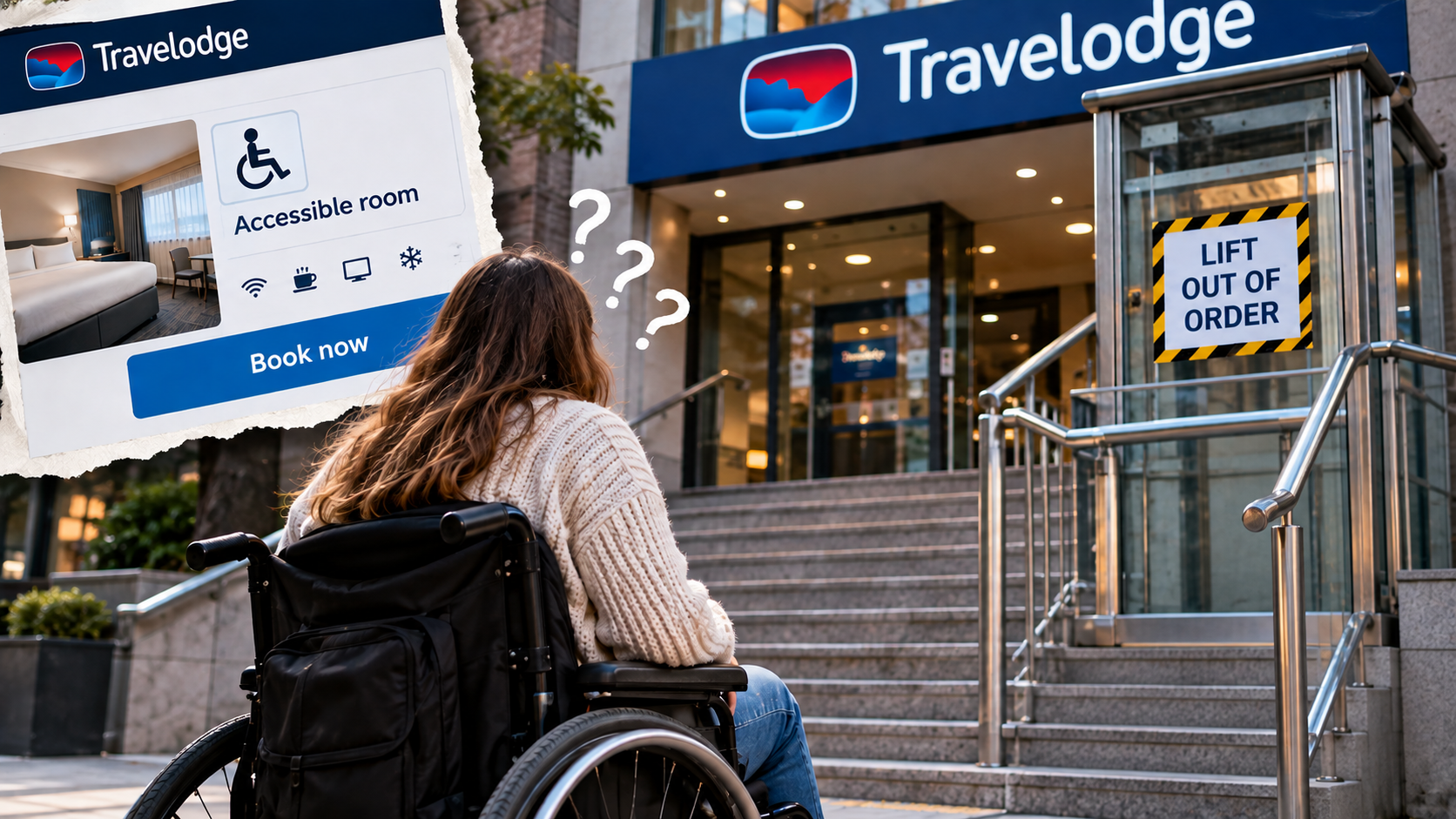
The same principle applies to hotels, restaurants, attractions and almost every other part of accessible travel. Having an accessible feature isn't enough if the systems surrounding it don't work. A hotel can have an accessible bedroom, but that doesn't help if the lift needed to reach it is broken. An airport can own hundreds of wheelchairs, but that doesn't help if the passenger who requested one is sitting on a jet bridge waiting for somebody to arrive.
The real lesson is about responsibility
The most important lesson from Birdie's experience may ultimately be less about wheelchairs and more about responsibility. When a disabled passenger needs assistance, there should never be a point where everyone involved assumes somebody else is dealing with them.
If cabin crew have reached the end of their responsibilities but the airport assistance team hasn't arrived, there needs to be a clear process covering that gap. Someone should know where the passenger is, what they need and who is responsible for them until the handover is complete. Just as importantly, the passenger should know what is happening.
That doesn't mean delays will never occur. Airports are complicated environments and flights arrive early, staff become unavailable, equipment gets delayed and technology occasionally fails. Accessibility isn't about pretending those problems can be eliminated completely. It's about designing systems that continue to protect and support disabled people when something does go wrong.
In Birdie's case, somebody eventually arrived with a wheelchair and helped her through customs and into the terminal. She has reportedly made clear that she doesn't blame the wheelchair attendant who ultimately assisted her. Her concern is about how she ended up waiting there in the first place.
That is where airlines and airports should focus their attention. If assistance was requested but wasn't ready, they need to understand why. If different systems showed different information, those systems need to communicate better. If there wasn't an appropriate employee immediately available, there needs to be a contingency plan. And if a disabled passenger has to wait, somebody needs to take clear responsibility for that person until the next stage of their journey begins.
For disabled travellers, accessibility isn't simply about whether an airport has wheelchairs, ramps and lifts. It's about being able to trust that the people and systems behind those facilities will work when they're needed.
Once that trust disappears, travelling can become something to fear rather than something to look forward to. And that may be the most important consequence of stories like this: the physical delay might last 20 minutes, but the loss of confidence it creates can last considerably longer.