Forgotten at the Gate

Published · 7 min read
A Wheelchair User's Distressing Experience Highlights the Reality of Accessible Air Travel
For many people, boarding an aeroplane is a relatively straightforward part of travelling. You arrive at the gate, join the queue, show your boarding pass and make your way down the aircraft aisle to your seat. But for disabled passengers who require assistance, something as routine as boarding can involve considerably more planning, coordination and trust.
Unfortunately, as the recent experience of wheelchair user and disability advocate Jennie Berry demonstrates, even when all the necessary arrangements have been made well in advance, there is no guarantee that things will go according to plan.
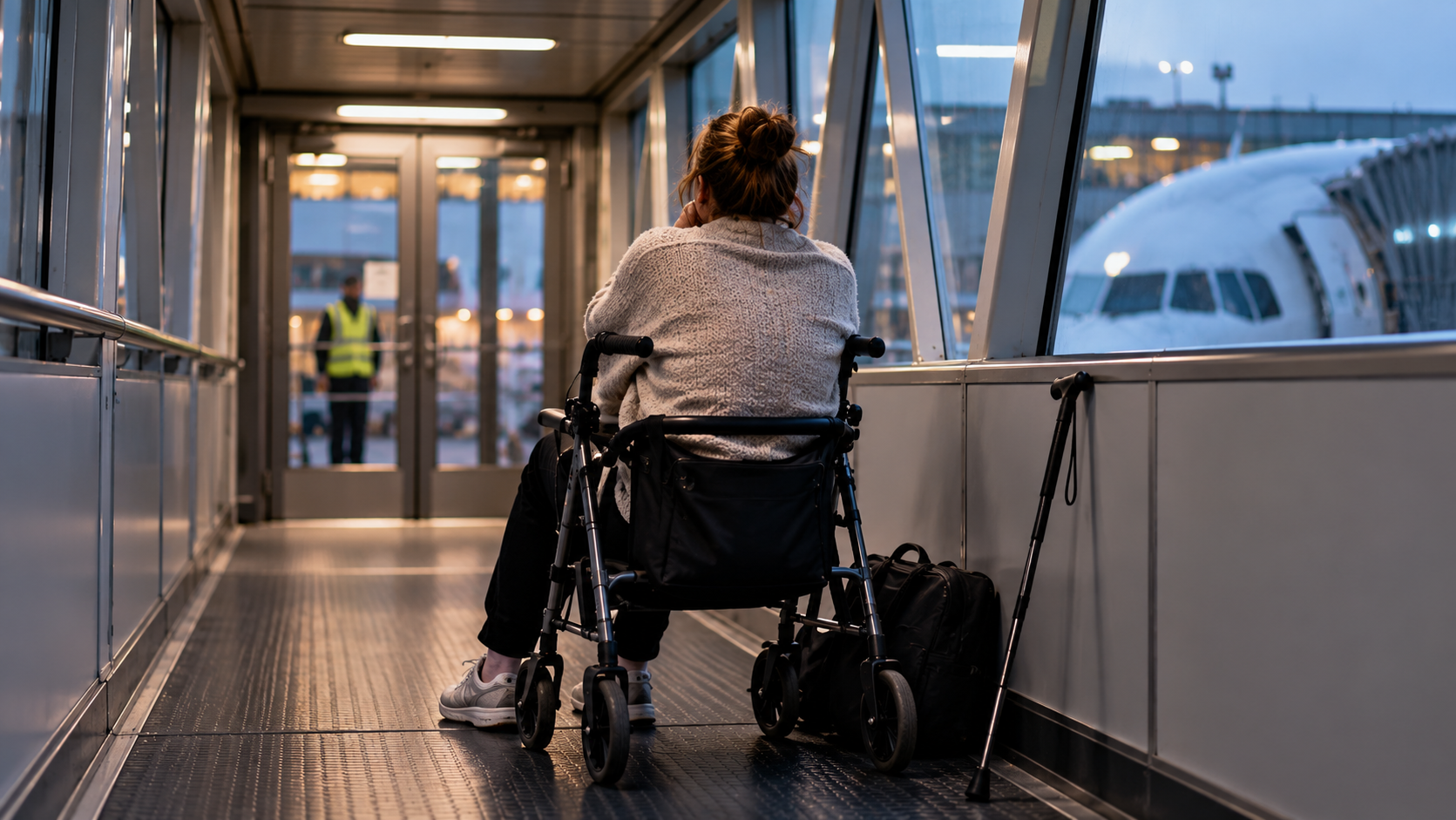
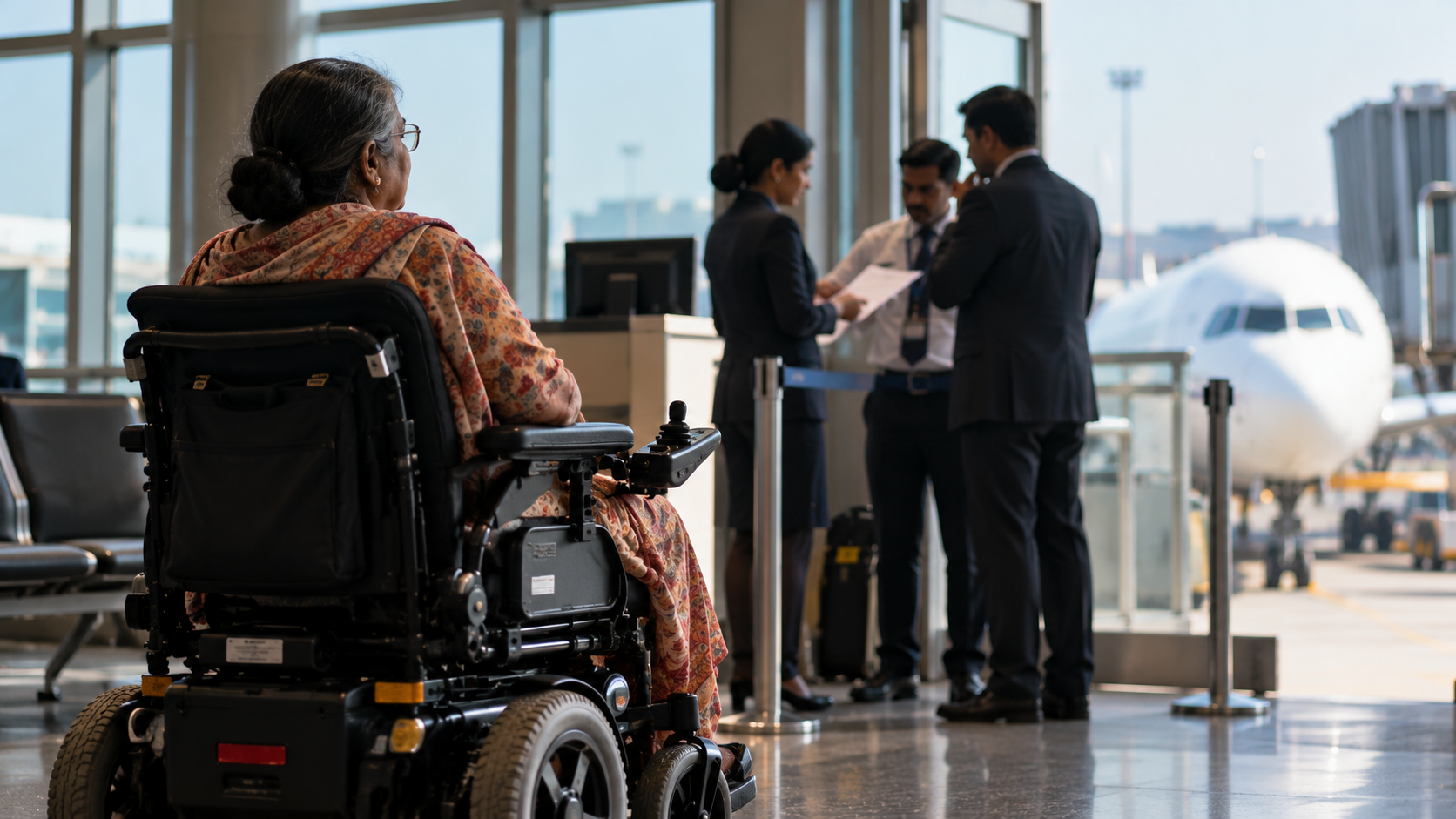
Jennie, who shares her experiences of disability and accessibility through her social media platform @wheelie_good_life, recently described an upsetting incident at Palma de Mallorca Airport. Having reportedly arranged wheelchair assistance around six months before her flight, she understandably expected that the airport and airline would have everything in place to ensure she could board safely and without unnecessary difficulty. Instead, she found herself effectively forgotten at the departure gate while other passengers boarded the aircraft.
According to Jennie's account, it was only after she drew attention to the fact that she was still waiting that staff appeared to realise she had not been assisted onto the plane. The response she reportedly received was that they hadn't realised she was getting on the flight. It is difficult to understand how something so fundamental could have been overlooked, particularly when assistance had been requested so far in advance. Passengers who require mobility assistance are not unexpected arrivals, and their needs should be clearly communicated between the various teams responsible for getting them from the airport terminal to their aircraft seat.
Unfortunately, the experience did not improve once staff finally arrived to assist her. By this point, the aircraft was fully boarded, meaning Jennie had to make her way onto a plane where other passengers were already seated and waiting. She described being rushed through the process, with staff handling her legs and transferring her onto an aisle wheelchair in circumstances that left her feeling uncomfortable. She then had to travel down the aircraft aisle in front of the other passengers to reach her seat. For anyone who has never experienced this process, it is worth considering just how exposed and vulnerable that situation can make someone feel. Being transferred from a personal wheelchair to specialist equipment is an inherently personal process, and it requires patience, appropriate handling and, above all, respect. Having to go through it in a rushed and highly visible situation because the assistance arrangements had apparently failed is an entirely different matter.
There was another particularly uncomfortable aspect to Jennie's account. During the incident, staff were reportedly speaking to one another in Spanish, seemingly unaware that she could understand what they were saying. This raises wider questions about the assumptions that can be made about disabled passengers. A physical disability does not mean someone cannot understand a conversation, recognise what is being said about them or appreciate the way they are being treated. Yet disabled people frequently describe situations in which conversations about their needs take place around them rather than involving them directly. It is a basic matter of respect to speak to the person receiving assistance, rather than treating them as though they are simply an issue to be managed between members of staff.
What makes experiences like this particularly frustrating is that disabled passengers are routinely expected to take responsibility for ensuring their own accessibility arrangements work. They are advised to book assistance in advance, contact the airline, notify the airport, arrive early and confirm their requirements. Many do all of these things, sometimes months before travelling, only to find themselves having to explain everything again when they arrive. When the system fails, it is often the disabled passenger who is left trying to resolve the situation, advocate for themselves and manage the emotional consequences of somebody else's organisational shortcomings.
There is also a wider issue around the psychological impact of travelling with a disability. For many wheelchair users, flying can involve considerable anxiety long before they reach the airport. Concerns about whether their wheelchair will be handled correctly, whether it will be damaged during loading, whether the appropriate equipment will be available for boarding and whether assistance will arrive when promised are very real. These are not minor inconveniences. A wheelchair is an essential piece of mobility equipment, and for many people it is fundamental to their independence. Having to place that independence in the hands of airport and airline staff requires a significant amount of trust. When that trust is undermined, the experience can be deeply distressing.
It is also important to recognise that Jennie is someone who has a public platform and is confident in speaking about disability rights. She knows how to articulate her experiences and challenge situations that are unacceptable. However, not everyone has that confidence or ability. Consider somebody who has a learning disability, communication difficulties, significant anxiety or a condition that makes it difficult to challenge authority figures. What happens when that person is left waiting at a gate, does not understand what is happening and is unable to advocate for themselves? Accessible travel cannot be dependent on an individual's ability to confront staff or repeatedly demand the assistance they have already arranged. The responsibility must sit with the organisations providing the service.
This is not simply a question of customer service. There are established legal protections for disabled passengers travelling within the European Union. Regulation EC 1107/2006 sets out the rights of passengers with disabilities and reduced mobility, including their entitlement to assistance at airports and when boarding and leaving aircraft. Assistance should be provided without additional charge, and airports and airlines have responsibilities to ensure that passengers can travel with appropriate support. In Spain, Aena provides airport assistance services for passengers with reduced mobility, and passengers are advised to notify their requirements in advance so that appropriate arrangements can be made. When a passenger has followed the necessary procedures, being left at a departure gate because staff apparently do not know they need assistance raises serious questions about how those systems are operating in practice.
Of course, no airport or airline can guarantee that operational difficulties will never arise. Delays, staff shortages and unexpected circumstances can affect any journey. However, these challenges do not remove the responsibility to treat disabled passengers with dignity, communicate properly and ensure that assistance is delivered safely. If something goes wrong, the response should be to explain the situation, apologise, involve the passenger in decisions and provide the support they need without making them feel rushed or responsible for the inconvenience.
Jennie's experience also highlights why disability awareness training needs to go beyond simply teaching staff how to operate equipment or move a wheelchair. It must include an understanding of dignity, consent, communication and the individual experiences of disabled people. Staff need to recognise that assistance is not about moving someone from one place to another as quickly as possible; it is about enabling that person to travel safely and with as much independence and control as possible. Being physically able to get a wheelchair user onto an aircraft does not necessarily mean that the process has been accessible or respectful.
Ultimately, the aviation industry needs to understand that accessibility is about much more than ramps, lifts and designated assistance points. It is about whether disabled passengers feel safe, respected and included throughout their journey. It is about ensuring that arrangements made in advance are actually communicated to the people who need to act on them, and that passengers are never left feeling like an inconvenience because they require additional support.
Nobody should have to fight to board a flight when they have already done everything asked of them. Nobody should have to experience the embarrassment of being rushed onto a fully boarded aircraft because an organisation has failed to coordinate its own assistance arrangements. And nobody should have to wonder whether the people responsible for supporting them are discussing their situation as though they are not even part of the conversation.
Jennie's account is another reminder that, despite years of discussion about accessible travel and disability inclusion, there is still a significant gap between what organisations promise and what some disabled passengers actually experience. The question is not simply whether a wheelchair user can physically get onto an aeroplane. It is whether they can do so safely, comfortably and with their dignity intact. Until that becomes the standard rather than the exception, the aviation industry still has some serious work to do.
Because accessible travel should never be about simply getting a disabled person onto a plane. It should be about ensuring they are treated as an equal passenger, with the same dignity, consideration and respect as everyone else.