Purple Tuesday - Small Adjustments Can Make All The Difference!

Published · 5 min read
Purple Tuesday must mean more than a purple logo
Purple Tuesday is an important reminder that disability inclusion is not something businesses should only think about when a particular awareness day comes around. It is an opportunity to examine the everyday decisions, policies and attitudes that determine whether disabled people can genuinely participate in society. While businesses may use the occasion to promote accessible shopping, improve customer experiences and demonstrate their commitment to disability inclusion, employment needs to be an equally important part of that conversation.
It is relatively easy for an organisation to demonstrate its support by changing its social media profile picture, publishing an inclusive statement or promoting an accessibility initiative. Those things can help raise awareness, but they mean very little if the same organisation is unwilling to make reasonable changes for a disabled employee who simply wants to continue doing their job.
Purple Tuesday should encourage businesses to look at their own workplaces and ask some honest questions. Are their recruitment practices inclusive? Do managers understand invisible disabilities and fluctuating conditions? Are employees comfortable disclosing a health condition without worrying that their hours will disappear? Do managers know how to have constructive conversations about reasonable adjustments? And when somebody needs additional support, is the first instinct to find a solution or to find a reason why they cannot remain in their role?
These questions matter because workplace inclusion is not just about giving somebody a job in the first place. It is about ensuring that they have a genuine opportunity to remain employed, develop their skills, contribute to the organisation and build a future for themselves.
There is also a significant business argument for getting this right. Disabled people represent a huge amount of talent, experience and potential, and excluding someone because an organisation is unwilling to consider relatively straightforward adjustments means potentially losing a valuable member of staff. A workplace that understands different needs can also create a better environment for everyone, because flexibility, understanding and good communication benefit more than just the individual receiving an adjustment.
Businesses should also remember that reasonable adjustments are not simply a gesture of goodwill. Where the Equality Act applies, they are a legal responsibility. The law does not expect every business to make every possible change regardless of cost or practicality, but it does require employers to properly consider what is reasonable in the circumstances. A perceived liability or a generalised concern about disability should not be used as a substitute for an individual assessment and a meaningful discussion.
Inclusion starts with asking, not assuming
I keep coming back to my friend's experience because it illustrates how easily somebody can be pushed out of employment when a business chooses to focus on the perceived difficulties of a condition rather than the possibilities of supporting the individual.
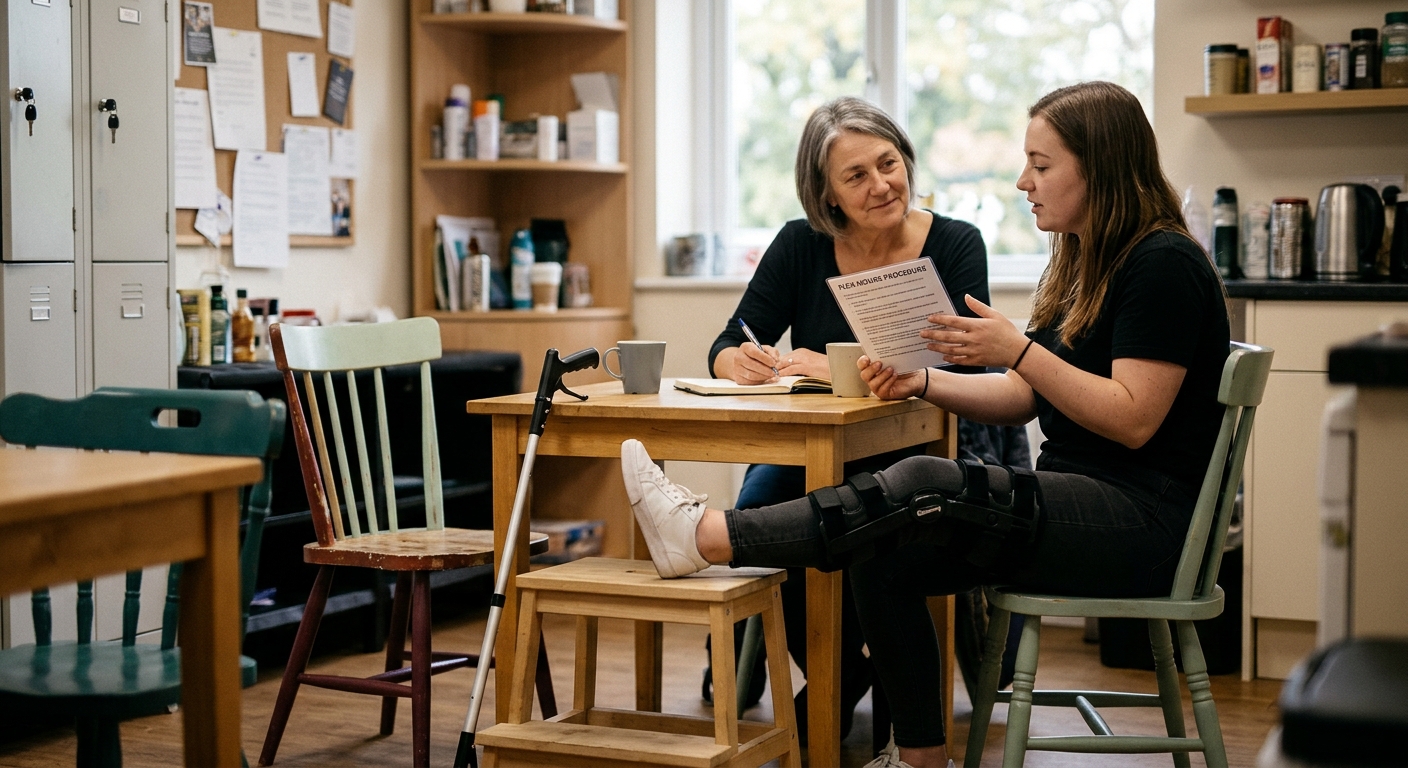
Imagine how different the outcome might have been if the franchise had simply sat down with him, listened to his concerns and discussed what would make his working environment manageable. Perhaps they could have agreed on a few small changes, established a plan for dealing with occasional flare-ups and ensured that he knew who to speak to if he needed support. Those conversations might have made it possible for him to continue working, maintaining his independence and feeling like a valued member of the team.
Instead, he was left facing the loss of his working hours and the very real possibility that his health condition had become a barrier to his employment, not because there was necessarily no way to accommodate him, but because the organisation did not appear willing to explore the alternatives.
I also think it is important to recognise that this is not an isolated issue affecting one individual or one particular franchise. There are people across all sectors who experience similar difficulties, whether they have heart conditions, chronic pain, neurological conditions, autism, ADHD, mental health conditions or other disabilities and additional needs. Some require significant adaptations, while others may need nothing more than a little flexibility, a change in routine or a better understanding from their manager. We cannot make assumptions about what somebody needs simply by knowing their diagnosis.
This is why listening to disabled employees is so important. Rather than making decisions based on fear, assumptions or blanket policies, employers should involve the individual in finding a practical solution. A person's disability should not automatically define their capabilities, and an occasional difficulty should not erase everything they are able to contribute.
A challenge to businesses this Purple Tuesday
As Purple Tuesday approaches, I would encourage every business, whether it is a small independent shop, a large franchise or a national organisation, to look beyond its public commitments and consider what inclusion actually looks like behind the scenes.
Think about the employees who might be struggling quietly because they are worried about disclosing a condition. Think about the people who have reduced their hours because their employer has not considered a more flexible arrangement. Think about those who have been made to feel that their disability makes them difficult to employ, when perhaps all they needed was somebody willing to have a conversation.
And, most importantly, think about what small changes could make a difference.
You might not need to spend money. You might not need to purchase specialist equipment or completely change your workplace. You might simply need to listen, be flexible and recognise that people do not all work in exactly the same way. Where more substantial adjustments are needed, there may also be support available through schemes such as Access to Work.
Purple Tuesday should not be about businesses demonstrating how inclusive they look. It should be about demonstrating how inclusive they actually are.
My friend's experience has reinforced something that I feel very strongly about: nobody should lose their opportunity to work simply because an employer sees a health condition as a problem rather than considering how it can be accommodated. There are legal responsibilities involved, but there is also a much bigger question of basic fairness, humanity and respect.
We need businesses to move away from the idea that disability inclusion is expensive, complicated or disruptive. Sometimes it will require investment, and sometimes adjustments will need careful planning. But very often, the changes that make the biggest difference are also the simplest.
So this Purple Tuesday, I would leave businesses with one question: before deciding that somebody with a disability or additional need cannot do a job, have you genuinely explored what you could change to help them do it?
Because sometimes the difference between excluding someone and giving them the opportunity to succeed is not a major investment or a complete workplace transformation. It is simply a willingness to make a small adjustment.
Inclusion isn't about making everyone fit the same working environment. It's about being willing to make reasonable changes so that more people have the opportunity to be part of it.