Purple Tuesday: Sometimes Inclusion Doesn't Cost a Penny!

Published · 4 min read
It Just Takes a Willingness to Make a Difference
Every year, Purple Tuesday provides an opportunity for businesses and organisations to reflect on how accessible and inclusive they really are for disabled people and those with additional needs. It encourages businesses to look beyond statements of commitment and consider what they are actually doing to remove barriers, improve experiences and create environments in which everyone feels welcome. But while much of the conversation around accessibility focuses on customer experiences, physical adaptations and public spaces, there is another equally important area that deserves far more attention: employment.
For disabled people and those living with long-term health conditions, finding and maintaining employment can already come with additional challenges. Unfortunately, those challenges are not always created by the condition itself. Sometimes, they are created by employers who make assumptions about what someone can or cannot do, or who see a disability as a problem to manage rather than an opportunity to make a few adjustments. A recent experience involving someone I know personally is a particularly frustrating example of how this can happen, and why the message behind Purple Tuesday needs to extend well beyond accessibility statements and social media campaigns.
A friend of mine was working for a very popular milkshake shop franchise when he began experiencing episodes of heart palpitations. These were not something he experienced constantly, but rather a chronic condition that could cause occasional flare-ups. Like many people living with a fluctuating health condition, there were times when he felt perfectly capable of carrying out his usual responsibilities and other occasions when he needed to be a little more mindful of his health and wellbeing. This was not a situation in which he was simply unable to work or carry out his role. It was a situation that required understanding, communication and, potentially, some relatively minor adjustments to his working arrangements.
However, rather than having a constructive conversation about how he could continue working safely, the response from the franchise was to remove his working hours altogether. He was effectively told that he was too much of a liability to have around. Think about the implications of that. Someone who wanted to work, contribute to a business, earn an income and maintain their independence was suddenly left without working hours because of a health condition. Instead of exploring what could be done to support him, the organisation appeared to move straight towards excluding him.
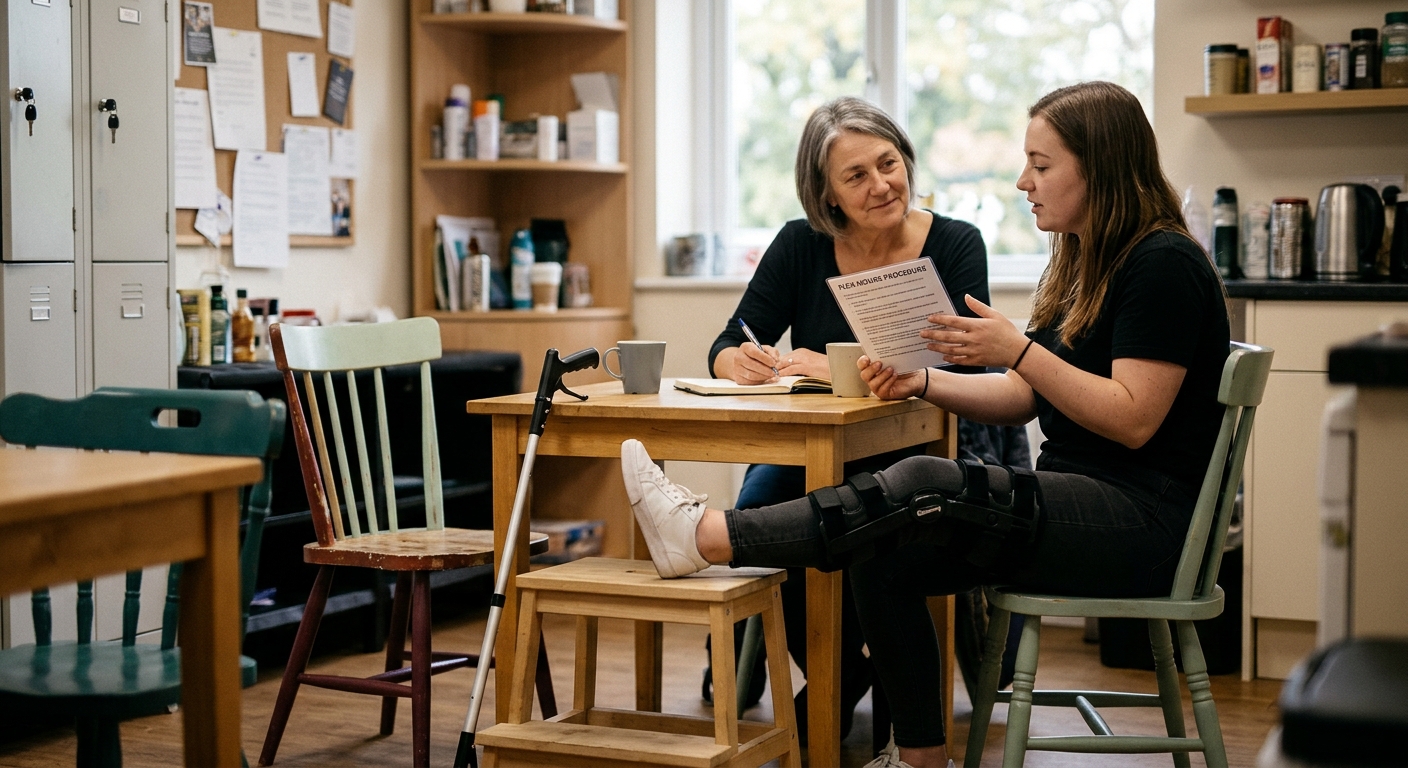
It is difficult not to question that approach. Did anyone properly explore what his condition meant in relation to his actual job? Was there a discussion about what happened during a flare-up, what support might be needed or whether a small change to his working routine could make a difference? Was an appropriate risk assessment considered, or was the decision based largely on assumptions about what might happen? Most importantly, did anybody take the time to ask him what would help him continue doing his job?
These are not unreasonable questions. They are exactly the questions an employer should be asking when a member of staff develops a health condition or discloses a disability. A diagnosis should not automatically become a reason to remove someone's opportunity to work, particularly when there may be practical ways of managing the situation.
There is also a legal dimension that businesses cannot afford to overlook. In the UK, the Equality Act 2010 protects disabled people from discrimination in employment and places a duty on employers to make reasonable adjustments where the legal conditions are met. A person does not necessarily have to have a visible disability, use mobility equipment or experience symptoms every day to receive protection. The definition of disability can include physical or mental impairments that have a substantial and long-term adverse effect on normal day-to-day activities. Importantly, conditions with recurring or fluctuating effects can also qualify, even where the individual experiences periods when their symptoms are less noticeable.
This is particularly relevant to people living with chronic health conditions. Too often, there is an assumption that if somebody looks well, is able to work most of the time or only experiences difficulties occasionally, their condition cannot be significant. That simply isn't how disability works. A person can have a condition that is invisible to colleagues and customers, experience periods of relatively good health and still be entitled to protection under equality legislation.
Of course, whether a particular condition meets the legal definition of disability and whether an employer has breached its obligations will depend on the individual circumstances. We cannot make a definitive legal finding about my friend's situation without knowing all the relevant details. However, removing someone's working hours because of a health condition, without properly considering reasonable adjustments and the circumstances of their role, raises serious concerns about potential disability discrimination and the employer's responsibilities under the Equality Act.
And this brings us to the point that I really want businesses to take away from Purple Tuesday: inclusion does not always require a major financial investment, a complete redesign of a workplace or a complicated new operating procedure. Quite often, it is the small changes that make the biggest difference!