PURPLE TUESDAY: WHERE IT ALL BEGAN

Published · 4 min read
THE STORY BEHIND A MOVEMENT FOR ACCESSIBILITY AND INCLUSION
Every year, Purple Tuesday provides an opportunity to shine a light on something that should never be an afterthought: making the world accessible to everyone. While many people now recognise the name and associate it with disability awareness, accessible shopping and inclusion, the story behind Purple Tuesday is just as important as the campaign itself. To understand why it matters, we need to go back to the beginning and look at what inspired its creation, the barriers it set out to challenge and the changes it hoped to bring about.
Purple Tuesday was launched in November 2018 by disability organisation Purple, under the leadership of its chief executive, Mike Adams. The initiative was created around a very straightforward but powerful idea: disabled people should be able to enjoy the same shopping experiences, access the same services and participate in everyday activities as everyone else, without having to fight against unnecessary barriers.
The first Purple Tuesday took place on Tuesday 13 November 2018. It was introduced as the UK's first dedicated accessible shopping day, with retailers, businesses and shopping destinations encouraged to make practical changes to improve the experience of disabled customers. From the outset, it was supported by the Government's Office for Disability Issues and attracted involvement from some well-known organisations, including Argos, Asda, Sainsbury's, Marks & Spencer and Barclays.
But what exactly prompted the campaign?
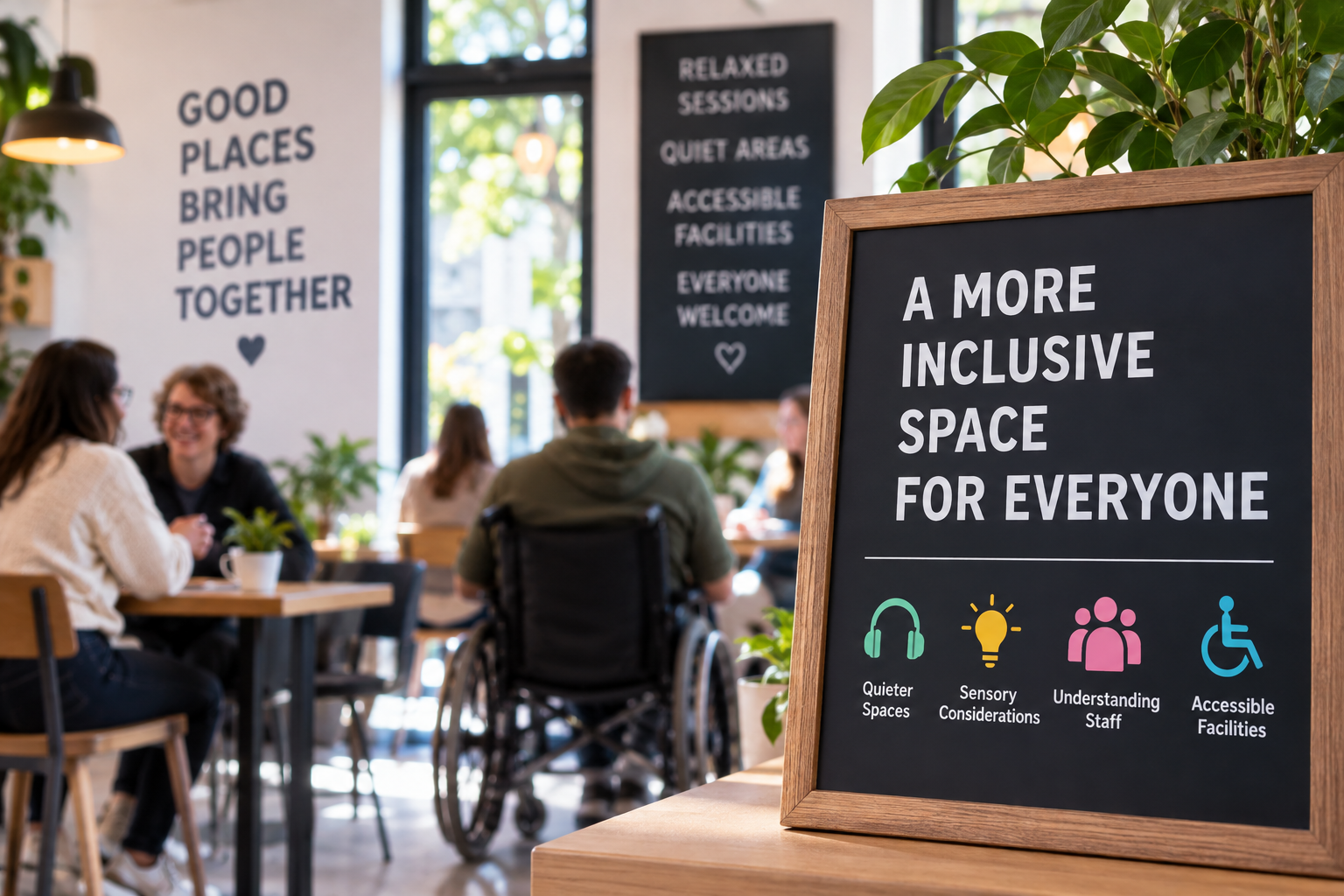
For many disabled people, something as ordinary as going shopping can involve a considerable amount of planning, uncertainty and frustration. A shop might have steps at the entrance, narrow aisles, inaccessible changing facilities, confusing signage or staff who have not received appropriate disability awareness training. For someone with a physical disability, a wheelchair user or someone with mobility difficulties, these barriers can make a visit impossible. For someone with autism, sensory processing differences or a learning disability, busy environments, bright lights, loud music and a lack of clear information can make the experience overwhelming.
The same problems exist online. Websites and shopping applications are not always designed with accessibility in mind, creating barriers for people who use screen readers, alternative communication methods or other assistive technology. What should be a straightforward transaction can become an exhausting experience.
Purple Tuesday was created to challenge this situation and encourage organisations to think differently about the way they design their services.
One of the original ideas behind the campaign was the economic importance of what became known as the Purple Pound. This refers to the collective spending power of disabled people and their households. At the time of the original launch, estimates placed this spending power at approximately £249 billion in the UK. The message to businesses was clear: accessibility is not simply something organisations should do because it is the right thing to do. It also makes commercial sense.
However, the campaign was never intended to be solely about money. Its wider purpose was to encourage businesses to recognise disabled people as valued customers, employees and members of their communities. It challenged the assumption that accessibility was an optional extra and instead promoted the idea that inclusion should be considered from the very beginning of planning and designing services.
Mike Adams was particularly clear that Purple Tuesday should not become an initiative that organisations simply acknowledge once a year before returning to business as usual. The intention was to use one dedicated day to encourage long-term improvements. This could mean providing better staff training, improving physical access, offering clearer information, making websites more accessible or simply listening to disabled customers and understanding what they actually need.
That distinction is important. Accessibility is not achieved by putting up a sign, changing a logo or posting a message on social media. It requires organisations to examine their everyday practices and make meaningful changes that improve people's experiences.
Although the original campaign focused heavily on shopping and retail, its message has relevance far beyond the high street. Leisure centres, restaurants, hotels, public services, entertainment venues, transport providers and educational establishments all have a responsibility to consider accessibility and inclusion.
For the SEND community, this message is particularly significant. A child or young person with additional needs does not stop having those needs when they leave the classroom. Families need accessible shops, welcoming leisure facilities, inclusive community spaces and businesses that understand different communication, sensory and physical requirements. Accessibility must follow people throughout their lives, not simply exist within educational settings.
Purple Tuesday also helped bring the conversation about disability inclusion into mainstream business discussions. Rather than leaving accessibility solely to disability charities and campaigners, it encouraged organisations to take ownership and make public commitments to improve.
Its origins remind us that the campaign was built around something very simple: disabled people should not have to accept a lesser experience because an organisation has failed to consider their needs.
As we approach another November and the opportunity to revisit the message behind Purple Tuesday, it is worth remembering that the most important part of the initiative has never been the colour purple or the date in the calendar. It has always been about changing attitudes, removing barriers and making everyday experiences genuinely accessible.
Because inclusion should never be something we celebrate for one Tuesday and forget about on Wednesday. It should be part of how we do things every single day.