Switzerland Misses Accessibility Deadline
By Amos Miller, founder of Buzzbo · 9 October 2026 · 3 min read
Switzerland Had Until 2023 to Make Its Railway Stations Accessible. Nearly 650 Still Aren't.
Switzerland is famous around the world for its railway system. Its trains connect major cities with small communities, its network is woven deeply into everyday life, and Swiss public transport is frequently held up internationally as an example of what an integrated railway can look like.
But for disabled passengers, there is another side to that reputation.
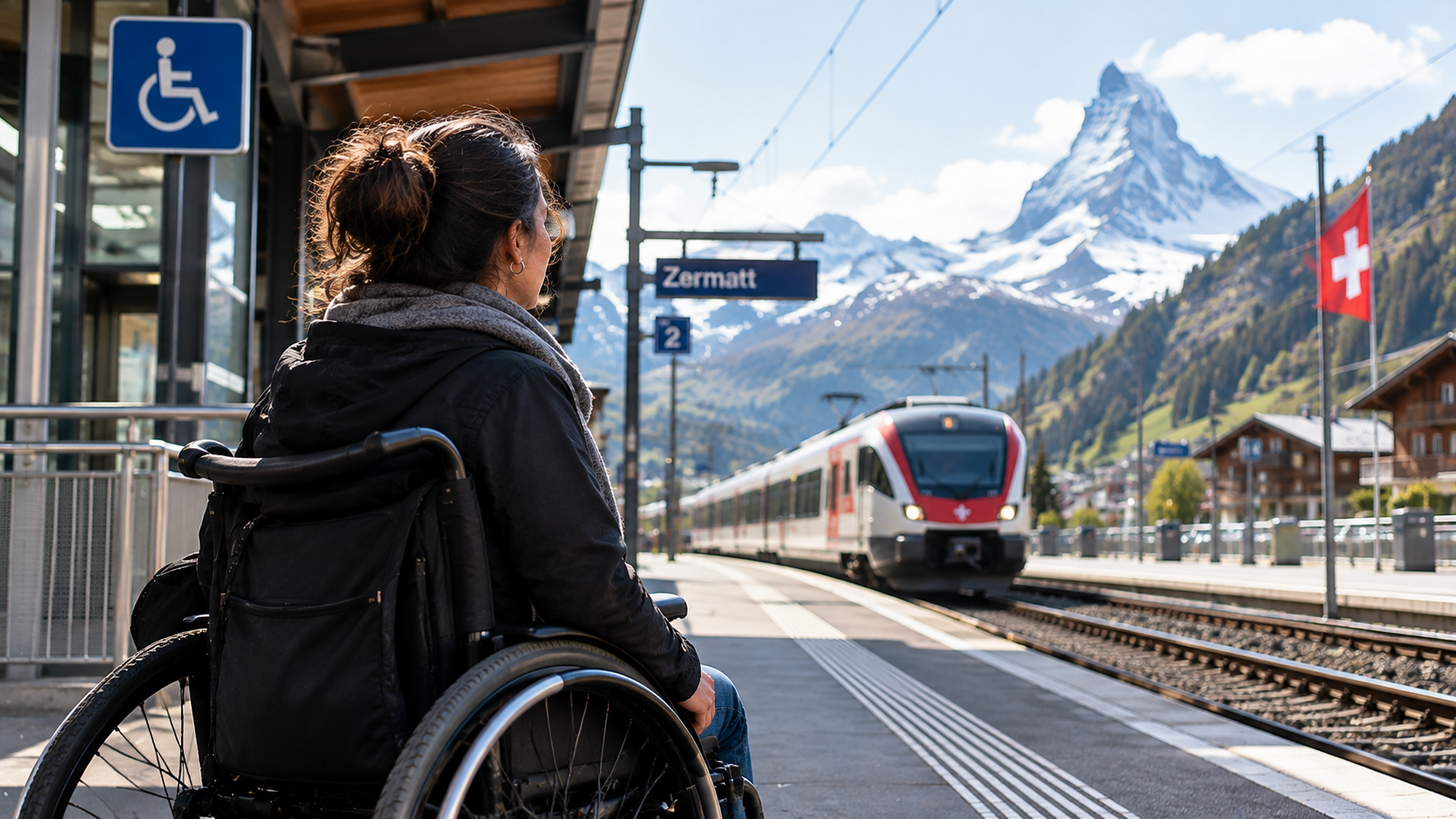
New figures published by Switzerland's Federal Office of Transport show that 1,168 of the country's roughly 1,800 railway stations were accessible by the end of 2025. Put another way, close to 650 stations had still not reached the required accessibility standard — despite Swiss law originally requiring stations to become accessible by the end of 2023.
There has unquestionably been progress. Larger and busier stations were prioritised for modernisation, meaning the proportion of passengers benefiting from accessible stations is considerably higher than the proportion of stations themselves. According to the latest figures, around 83% of passengers now use stations considered accessible. Another 193 stations are expected to become accessible by 2029.
Those numbers tell two stories simultaneously.
The first is that investment in accessibility is having a real effect. If 83% of passengers are passing through accessible stations, changes to major parts of the network are benefiting a very large number of people.
The second is more uncomfortable: a legal accessibility deadline passed almost three years ago, and hundreds of stations remain unfinished.
For somebody who doesn't need accessible infrastructure, that might sound like an administrative delay. For somebody who uses a wheelchair or has another mobility impairment, the consequences are much more practical. A railway network isn't accessible simply because the station where you begin your journey has been modernised. The station where you get off needs to work too.
That is one of the fundamental differences between accessibility and many other infrastructure improvements. An inaccessible point somewhere in the journey can undermine the accessibility of everything around it.
A beautiful step-free station at one end isn't particularly useful if somebody cannot independently leave the train at the other.
This also demonstrates why national percentages need context. Saying that 83% of passengers benefit from accessible stations sounds impressive, and it represents meaningful progress. But accessibility isn't experienced nationally. It is experienced individually.
The disabled passenger living near one of the remaining inaccessible stations doesn't experience an 83% accessible railway. They experience the station in front of them.
There are legitimate reasons infrastructure programmes take time. Railway stations can be extraordinarily difficult places to modify. Platforms may need raising or rebuilding, historic structures can restrict what engineers can change, lifts and ramps require space, and construction often has to take place while a functioning railway continues operating around it.
Those engineering realities help explain why accessibility projects can be complicated. They don't erase the significance of the deadline being missed.
The Swiss Disability Equality Act provided operators with a long transition period to make public transport accessible. The deadline was the end of 2023, and the latest figures demonstrate that the work is still incomplete.
There is an important lesson in that for accessibility projects everywhere.
A commitment to become accessible at some point is not the same thing as being accessible today.
For disabled people, the difference matters enormously. Accessibility delayed can mean years of journeys requiring additional assistance, alternative routes or somebody else being present. It can mean being unable to travel spontaneously while friends or colleagues simply turn up and catch a train. In some cases it can determine whether a journey is practical at all.
The Swiss figures also highlight why detailed accessibility information is so important. When accessibility varies from station to station, disabled passengers need to know exactly what they will encounter before beginning a journey. A generic claim that a railway is accessible doesn't provide enough information when hundreds of locations still aren't.
There is nevertheless progress worth recognising. More than 1,100 stations have reached accessibility requirements, the busiest locations have been prioritised and another 193 stations are scheduled for improvement by 2029. The experience of a large majority of passengers is therefore different from what it would have been before the programme began.
But celebrating that progress shouldn't require ignoring what remains unfinished.
Accessibility isn't ultimately measured by how impressive the national percentage looks. It is measured by whether the person arriving at a particular station can actually use it.
For the passengers relying on Switzerland's hundreds of remaining inaccessible stations, the legal deadline may have passed in 2023.
Their barrier hasn't.